
.jpg)
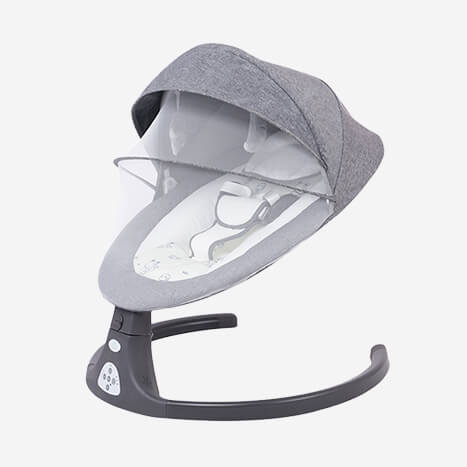
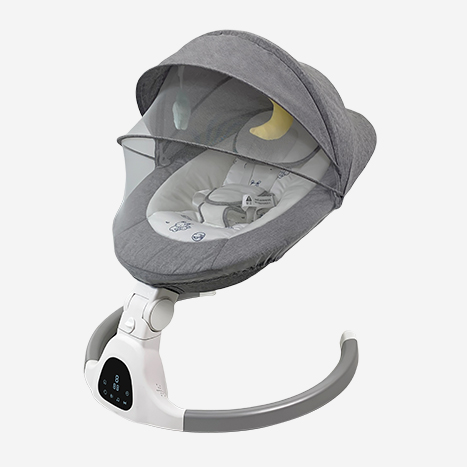
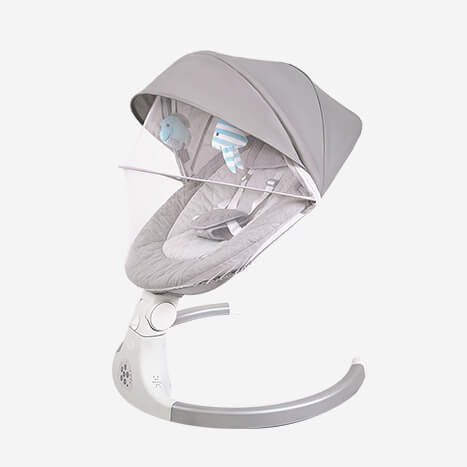
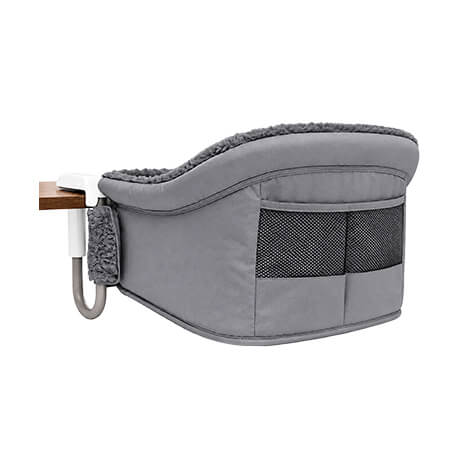
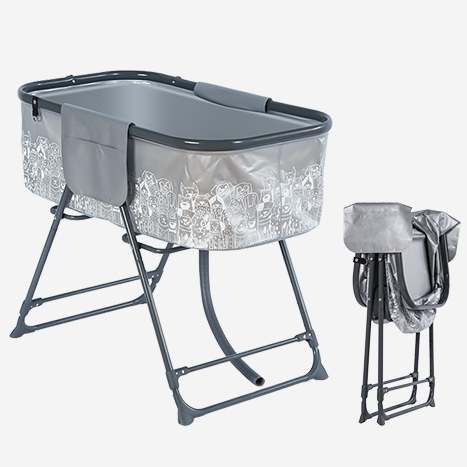
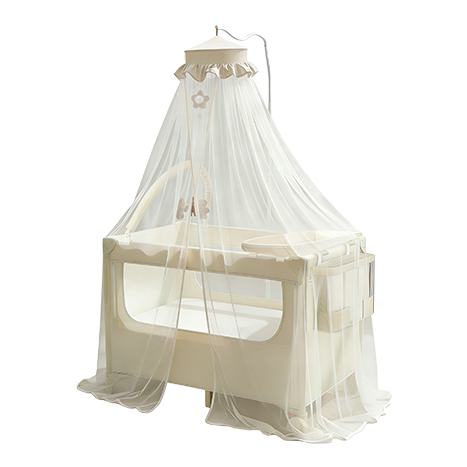
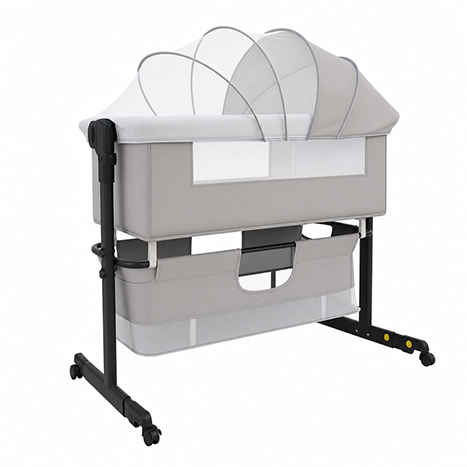


Whether you are an established baby product brand expanding your product portfolio, a DTC brand entering the baby category, or an importer exploring new opportunities, developing an electric baby rocker requires more than selecting a product from a catalog.
Successful products are built through careful decisions around market positioning, functional design, safety compliance, and manufacturing capability. This guide explains the key considerations brands need to understand before starting development.
1. Why Brands Are Exploring the Electric Baby Rocker Category
Growing Demand for Hands-Free Baby Care
Modern parents are increasingly looking for products that reduce the physical demands of newborn care. An electric baby rocker provides automatic rocking motion that helps soothe infants while giving parents flexibility during daily routines — whether cooking, working, or simply resting. This shift in parenting behavior is driving consistent demand growth across all major markets.
Increasing Demand for Smart Baby Products
Consumer expectations in the baby product category have moved beyond basic functionality. Features such as remote control operation, Bluetooth music connectivity, timer settings, and automatic rocking are now standard expectations in mid-to-premium product segments. Brands that can deliver on these specifications are well-positioned to capture growing demand.
Opportunity for Brand Differentiation
For brands, the more strategic opportunity is not simply selling an existing product — it is building a category position. Developing a customized electric baby rocker allows brands to control product design, feature configuration, and market positioning in a way that sourcing an off-the-shelf product cannot provide.
2. Define Your Product Strategy Before Development
Product Type Selection
Electric baby rockers, swings, and bouncers are related but distinct product categories. Understanding the differences is an important first step in defining your development brief.
| Type | Motion | Typical Use | Market Position |
| Electric Rocker | Front-to-back, motorized | Newborn soothing, short supervised periods | DTC, Amazon, premium retail |
| Electric Swing | Multi-directional, wider arc | Longer settling and sleep support | Mass market, baby specialty retail |
| 2-in-1 Rocker/Bouncer | Rocker + stationary seat mode | Extended age range, versatility | Mid-to-premium, gift registry |
Many brands choose multi-functional designs because they can extend product usage scenarios and create stronger market differentiation. The right choice depends on your target price point, distribution channel, and the consumer needs you are addressing.
Target Market and Consumer Expectations
One of the most common development mistakes is building a single global product without accounting for meaningful differences in what consumers in different markets expect. A successful product configuration should be based on target market research rather than simply combining all available functions.
European markets (UK, Germany, Nordics) tend to prioritize:
- Minimalist design that fits modern home interiors — neutral palettes, clean silhouettes
- Sustainable and certified materials (organic cotton, OEKO-TEX certified fabrics)
- Essential functions executed reliably, rather than feature quantity
- Compact form factor suited to smaller living spaces
North American markets (US, Canada) tend to prioritize:
- Multiple rocking directions and speed settings
- Bluetooth and app control as standard expectations in the $150+ segment
- Larger, more feature-rich designs that communicate value at retail
- Strong packaging presentation
Australia and New Zealand share characteristics of both orientations, with additional demand for:
- Breathable mesh fabrics suited to warmer climates
- Lightweight and portable designs
- Contemporary aesthetics aligned with European preferences
Feature Configuration
Every additional function affects not only consumer experience but also product cost, certification requirements, and production complexity. Feature decisions should be made deliberately, based on what the target market actually values — not on maximizing specification lists.
Key configuration decisions include:
Motion system — 3-speed, 5-speed, or variable speed; single-direction or multi-directional. Five-speed is the current standard in premium segments. Multi-directional motion adds tooling cost but supports higher retail price positioning.
Control interface — Physical buttons, remote control, or Bluetooth app control. Remote control adds meaningful value at minimal cost increase. App control is expected at $200+ positioning but requires ongoing software maintenance.
Audio — Built-in melodies or Bluetooth audio streaming. Bluetooth streaming pairs naturally with app control and is increasingly expected in premium products.
Safety harness — 3-point or 5-point. Five-point harness is the market standard for electric rockers and is required for US ASTM compliance.
Fabric and materials — Standard polyester, breathable mesh, or organic cotton. Material selection affects both consumer perception and certification requirements in certain markets.
3. Key Product Development Considerations
3.1 Motion System Design
The rocking mechanism is the core functional element of an electric baby rocker, and its design has a direct impact on user experience and product longevity. Brands should evaluate:
- Movement pattern — whether the motion feels natural and consistent across all speed settings
- Speed range — whether the lowest setting is gentle enough for newborns and the highest setting provides meaningful variety
- Noise level — excessive motor noise is one of the most common complaints in consumer reviews and can significantly affect perceived quality
- Motor durability — the mechanism needs to perform reliably across thousands of hours of use
A smooth and quiet rocking mechanism is essential. Unstable movement or excessive noise will directly affect user experience and generate returns and negative reviews in retail channels.
3.2 Safety Structure and Harness Design
Safety is not a final testing step — it needs to be designed into the product from the beginning. Key structural considerations include:
- 5-point harness system — provides secure restraint during active rocking motion and is required for compliance in multiple markets
- Frame stability — the base design must prevent tipping under normal use, including when a baby moves or kicks
- Anti-slip feet — essential for use on hard floors, which are common in European and Australian homes
- Weight capacity — must be clearly defined and structurally supported, typically covering birth to 9kg for the primary use phase
3.3 Comfort and Ergonomic Design
Babies may spend extended periods in a rocker, making comfort a primary design requirement rather than a secondary consideration. Key factors:- Recline angle — must support newborn head and neck without requiring independent muscle control
- Newborn insert or bolster — removable support that accommodates smaller infants and can be removed as the baby grows
- Breathable fabric — prevents overheating during extended use, particularly important in warmer markets
- Cushion density — sufficient for comfort but not so deep that it creates a suffocation risk; this is also a certification consideration
3.4 Smart Function Integration
Technology integration is an important differentiator in the current market, but smart functions should solve real user problems rather than increase complexity. The most valued features based on consumer feedback across key markets:
- Remote control allows parents to adjust speed and settings without disturbing a sleeping baby — practical value, minimal cost impact
- Bluetooth music enables parents to play familiar sounds or white noise from their phone, which many parents already use for infant sleep
- Timer settings help parents manage usage time and avoid over-reliance on the rocker for sleep
The principle for smart feature development: if a feature requires a parent to read the manual to use it, it is too complex for this product category.
4. Safety Compliance: Plan Before Production
Most brands new to the baby product category underestimate how significantly compliance requirements affect product design. Certifications are not a post-production checkbox — they need to be integrated into your product specifications from the beginning. Attempting to certify a finished product that was not designed with compliance in mind often requires costly structural or material redesigns.
Here is what is required across key target markets:
| Market | Key Standard | Notes |
| United States | ASTM F2088 (CPSC enforced) | Third-party lab testing required. New CPSC rulemaking for infant/toddler rockers was proposed in 2023 — monitor for updates |
| United Kingdom | EN 12790 + UKCA mark | Post-Brexit, UK requires UKCA separately from CE — CE certification alone is not sufficient for UK market entry |
| European Union | EN 12790 + CE mark | Motorized products must also comply with the Low Voltage Directive (LVD) and EMC Directive |
| Australia | AS/NZS consumer safety standards | Mandatory compliance; ACCC actively monitors product recalls |
| New Zealand | Aligns with AU standards | Generally follows Australian requirements |
Practical implications for your development timeline:
- If you are targeting multiple markets simultaneously, plan for parallel certification testing — sequential testing can add 3–6 months to your launch schedule
- Work with an accredited third-party testing laboratory (SGS, Bureau Veritas, and Intertek are commonly used) from the prototype stage
- For motorized products entering the EU or UK, electrical safety compliance (LVD and EMC) applies in addition to the product-specific standard
Working with a manufacturer that has prior experience exporting to your target markets — and can provide existing test documentation for their base products — significantly reduces both development risk and timeline.
5. OEM vs. ODM: Choosing the Right Development Path
ODM: Faster to Market, Lower Initial Investment
With ODM (Original Design Manufacturing), you select from a manufacturer's existing product designs, apply your branding, and go to market. The product already has established tooling, existing certification test data, and a proven production process.
ODM is the right choice when:
- You are entering the category for the first time and want to validate demand before committing to custom development
- Your launch timeline is tight — ODM can reduce time-to-market by 4–8 months compared to full OEM development
- Your initial order volumes do not justify tooling investment
- You are an Amazon or DTC seller prioritizing speed and margin efficiency in an early phase
The trade-off: competitors working with the same manufacturer can access the same base product. Brand differentiation is limited to visual identity, packaging, and marketing positioning.
OEM: Full Control, Long-Term Differentiation
With OEM (Original Equipment Manufacturing), the manufacturer builds to your specifications. You control the design, materials, feature set, and every aspect of the finished product.
OEM is the right choice when:
- You have a clear product vision with requirements that existing ODM products cannot meet
- You are building a brand with long-term category ambitions beyond a single SKU
- You can support the tooling investment (typically $15,000–$50,000+ depending on complexity) and associated MOQ requirements
- You want IP protection and market exclusivity on your product design
When to Choose a Hybrid Approach
Many brands do not fit cleanly into either category. A practical middle path: begin with ODM to test the market and validate demand, then transition to OEM development once you have real sales data to inform your custom product brief. This approach de-risks the initial investment while preserving the option to build a proprietary product at the right stage of growth.
A manufacturing partner who offers both OEM and ODM capability under one roof makes this transition significantly smoother — you are not rebuilding a supplier relationship from scratch when your development needs evolve.
6. From Product Concept to Mass Production
For brands developing a customized electric baby rocker, the typical development process follows these stages:
Step 1 — Product Concept Define target market, functional requirements, design direction, and price positioning. A well-defined brief at this stage prevents expensive revisions later.
Step 2 — Prototype Development Engineering team translates the product brief into physical prototypes for appearance evaluation, function testing, and user experience assessment. Multiple prototype rounds are normal for OEM development.
Step 3 — Testing and Optimization Prototypes are evaluated for safety performance, motion quality, noise levels, durability, and compliance with target market standards. Revisions are made before final sample approval.
Step 4 — Certification Preparation Test documentation is prepared and submitted to accredited third-party laboratories for the required markets. This stage runs in parallel with final production preparation to minimize timeline impact.
Step 5 — Mass Production After sample approval and certification clearance, production begins with structured QC checkpoints throughout — incoming material inspection, in-process checks, and pre-shipment final inspection.
At Babypie, our in-house engineering team, compliance support, and quality management system are integrated across all five stages — which means brands working with us have a single point of accountability from concept through delivery.
7. How to Evaluate an Electric Baby Rocker Manufacturer
Choosing the right manufacturing partner is one of the most consequential decisions in this process. Not all manufacturers are equipped to support global brands at the standard the market requires.
Product Development Capability Does the manufacturer have an in-house design and engineering team, or do they outsource development work? Can they support both OEM customization and ODM solutions? Have they brought new products to market in the past 12 months?
Compliance Experience Can they provide existing test reports for your target markets (ASTM F2088, EN 12790, ACCC)? Have they successfully exported to the US, UK, or Australia before? Do they understand the difference between CE and UKCA certification requirements?
Manufacturing Capability What is their production capacity, and how do they handle demand peaks? What QC processes are in place at each production stage? What is the reorder lead time once tooling is established?
Communication and Support Do they have English-speaking project managers for international accounts? Can they support custom packaging design, instruction manual localization, and market-specific compliance labeling? What is their typical response time for technical queries during development?
A manufacturer who answers these questions with documentation and verifiable references — rather than verbal assurances — is the partner worth working with.
FAQ
Q: What is the minimum order quantity (MOQ) for OEM and ODM electric baby rockers?
MOQ varies by development path — ODM is generally lower than OEM. Contact us with your target volume and we can confirm what's feasible for your project.
Q: How long does it take to develop a custom electric baby rocker from concept to first shipment?
ODM customization typically takes 45–60 days from sample approval. Full OEM development timeline varies by project — contact us with your requirements for a detailed assessment.
Q: Can the same product be certified for multiple markets simultaneously?
Each market requires separate certification. We recommend running parallel testing across markets from the prototype stage to avoid timeline delays. Note that post-Brexit, UK UKCA and EU CE are separate requirements — one does not cover the other.
Q: What design customization is possible for OEM products?
All aspects of the product are open for customization — structure, motion system, control interface, materials, color, harness, and packaging. Contact us to discuss your brief, whether it's a detailed specification or an early-stage concept.
Q: What is the difference between electric rockers, swings, and bouncers?
Rockers provide motorized front-to-back motion for newborn soothing. Swings have a wider arc and multi-directional movement for longer settling periods. Bouncers respond to the baby's own movement and are typically non-motorized. The right choice depends on your target market, price point, and consumer segment.
Q: Do you offer samples before committing to mass production?
Yes. ODM pre-production samples are available before mass production is confirmed. For OEM projects, samples are produced at each development stage with brand approval required to proceed. Sample costs are discussed per project and can often be credited against the first production order.
Work With a Manufacturer Built for Global Brands
Whether you need an ODM solution to enter the market quickly or a customized OEM product for long-term brand development, Babypie provides product development, engineering support, compliance coordination, and manufacturing solutions for global baby product brands.With over 15 years of experience and operations across China, Spain, and the United States, we work with brands from initial concept through to ongoing production — across the US, UK, European, Australian, and New Zealand markets.
[Contact us to discuss your project →]