

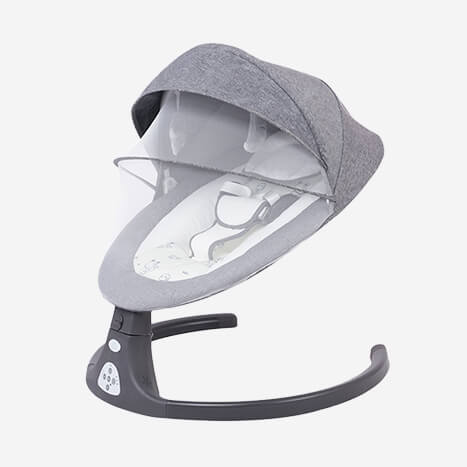
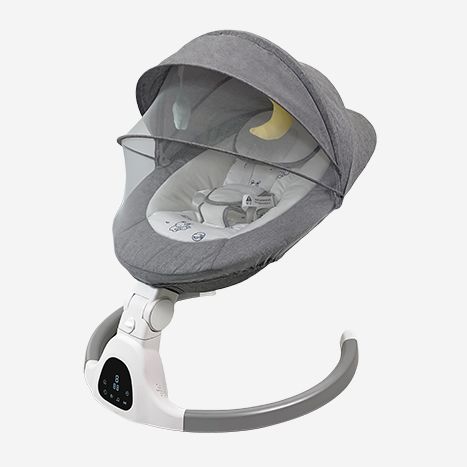
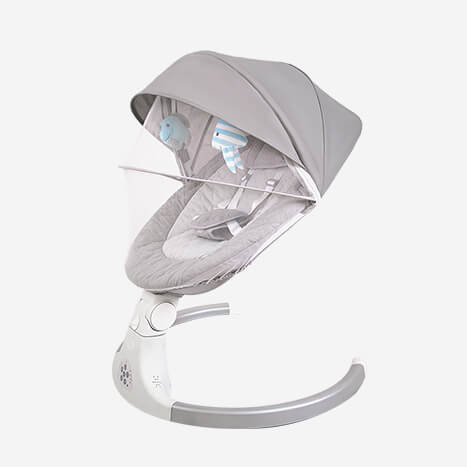
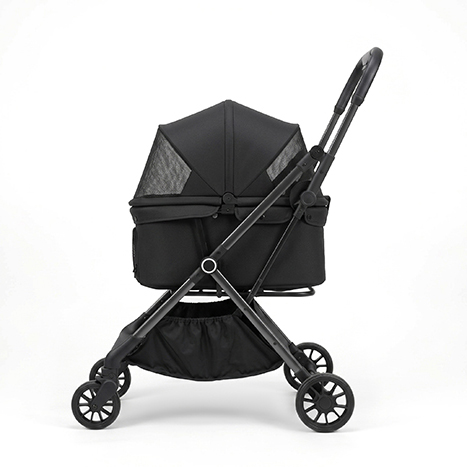
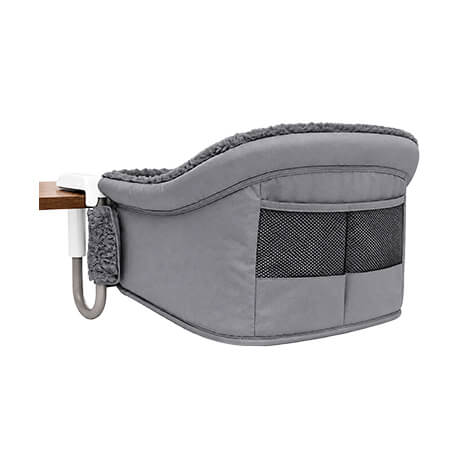
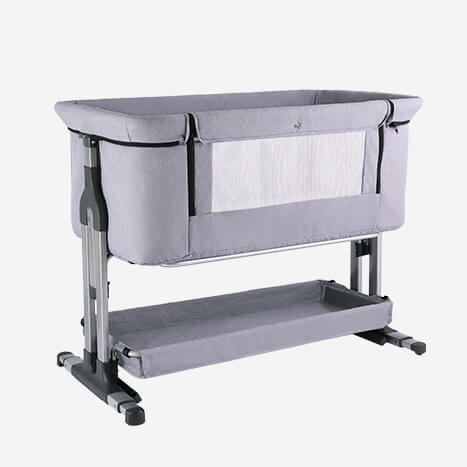
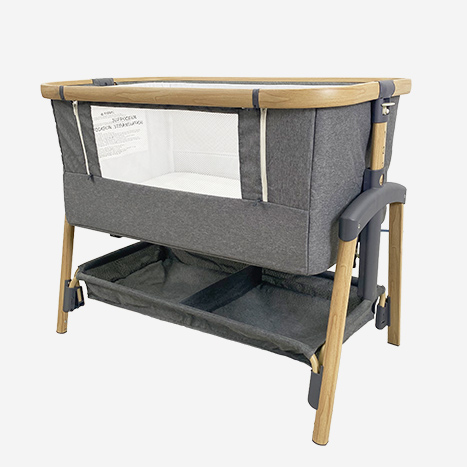
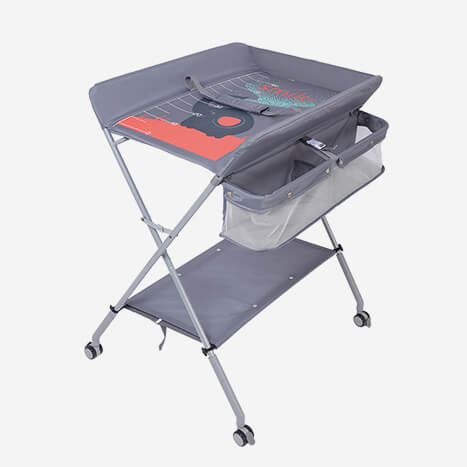


Choosing the right baby sleeping product is an important decision for baby brands and retailers. While travel cribs, bedside cribs, and playards may appear similar at first, they serve different purposes and appeal to different customer needs.
For brands planning to expand their baby product lines, understanding these differences can help with product positioning, feature selection, and sourcing decisions.
In this guide, we compare the three product categories and highlight the key factors buyers should consider when developing or sourcing products for their markets.
1. Understanding the Three Product Categories
Although these products may share features such as mesh panels, folding frames, and fabric construction, their intended uses are different.
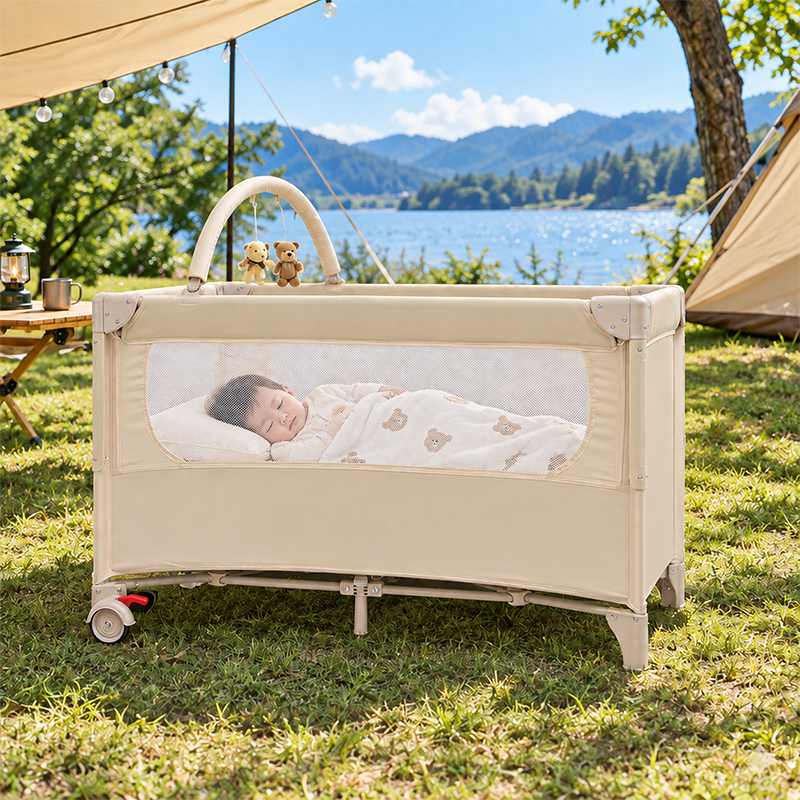
Travel Crib: Designed for Portability
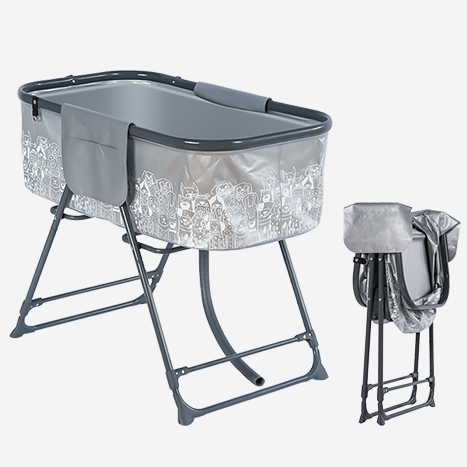
A travel crib is designed to provide a convenient sleeping space for babies away from home. Its key selling points typically include a foldable structure, compact storage, lightweight construction, and convenient transportation.
For baby brands, travel cribs can be developed for families who travel frequently, visit relatives, or need a portable sleeping solution.
When evaluating a travel crib, consider:
-
Folding mechanism and ease of setup
-
Folded dimensions and carrying options
-
Product weight and frame construction
-
Fabric durability and ease of cleaning
-
Storage and transportation convenience
A well-designed travel crib should balance portability with everyday usability.
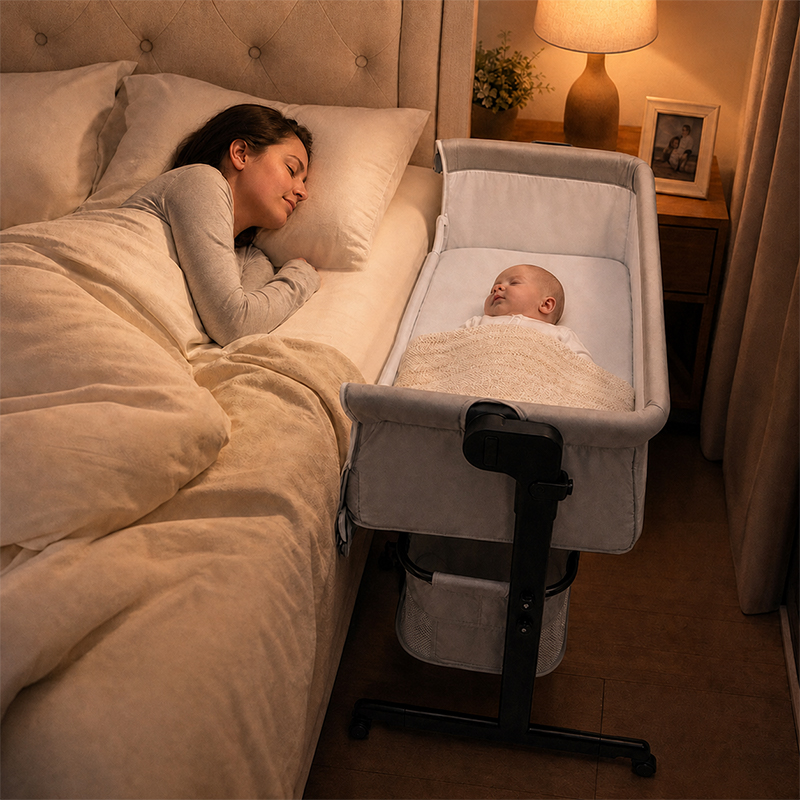
Bedside Crib: Designed for Bedside Use
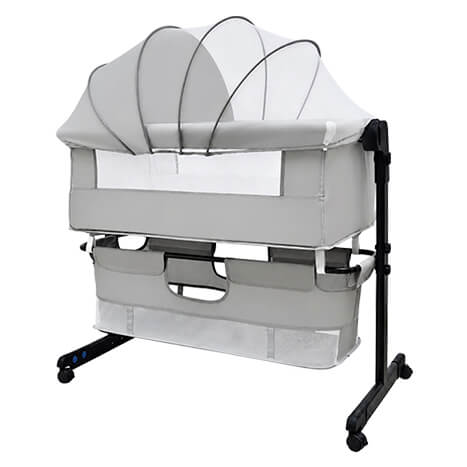
A bedside crib is intended to be positioned next to an adult bed, allowing caregivers to keep the baby close during nighttime care. Depending on the design, models may include adjustable height settings, mesh sides, and a side-opening structure.
For brands targeting the newborn product segment, bedside cribs can complement other early-stage baby care products.
Important product development considerations include:
-
Height adjustment and compatibility with different adult beds
-
Stability and structural design
-
Side-panel configuration
-
Ease of assembly and daily operation
-
Storage options and overall footprint
Bedside cribs vary considerably in design. Buyers should confirm the intended use, product classification, and applicable requirements for their target markets before finalizing specifications.
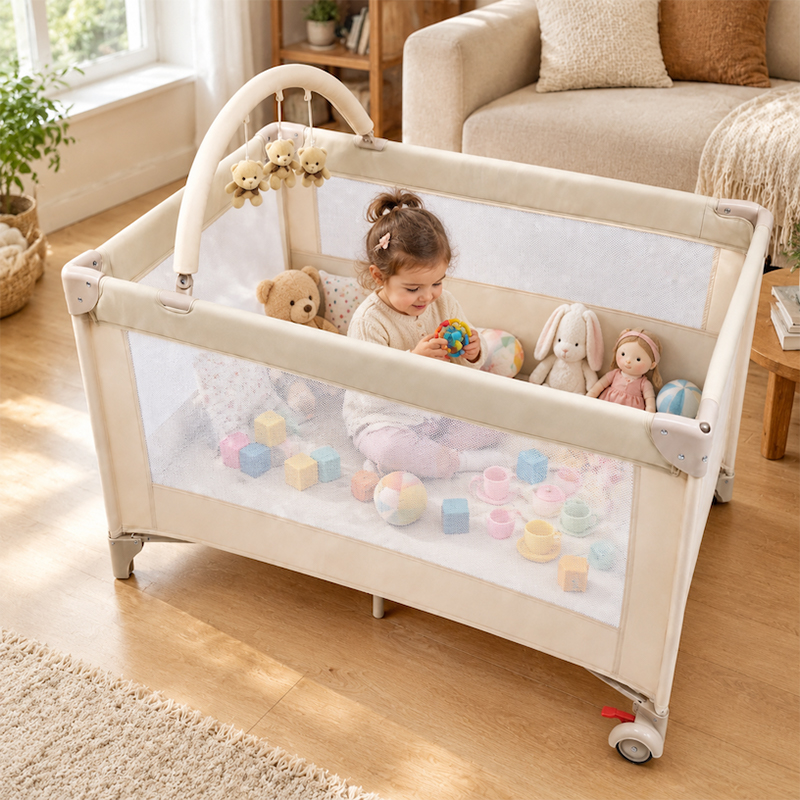
Playard: Designed for Flexible Everyday Use
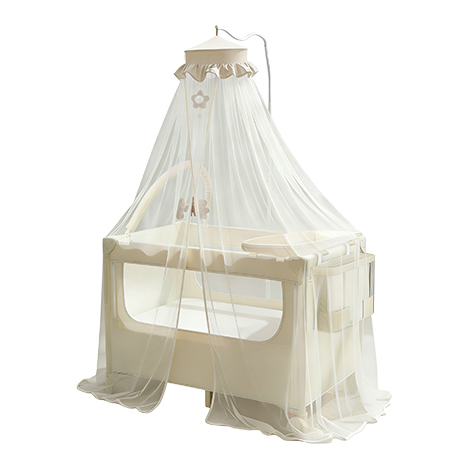
A playard generally provides a contained space for babies to rest or play, depending on the product design and its intended use. Some models focus on a simple play space, while multifunctional versions may include accessories such as a changing station, toy bar, or removable bassinet.
For brands looking to offer more than a basic sleeping product, a multifunctional playard can provide opportunities to differentiate through configuration and accessories.
When evaluating a playard, consider:
-
Available internal space
-
Mesh panel design and visibility
-
Folding and storage mechanism
-
Wheels, storage pockets, and other practical features
-
Optional accessories and modular configurations
-
Fabric choices and ease of maintenance
Not every playard is designed for every use. Product claims and instructions should clearly reflect the intended function of each configuration.
2. Travel Crib vs. Bedside Crib vs. Playard: A Quick Comparison
The following table can help buyers compare the three categories during product planning.
| Evaluation Facto | Travel Crib | Bedside Crib | Playard |
| Main focus | Portability | Bedside access | Flexible everyday use |
| Key design priority | Folding and transport | Height and bedside configuration | Space and functional options |
| Common features | Compact frame, carry bag | Height adjustment, side access | Mesh panels, storage, optional accessories |
| Product positioning | Travel and portable use | Newborn and bedside care | Rest and play, depending on design |
| Development opportunity | Lighter or more compact designs | Adjustable configurations | Multifunctional accessories |
| Important consideration | Folded size and weight | Bed compatibility and intended use | Configuration and intended use |
These categories can overlap. For example, a portable crib may also function as a playard, while some multifunctional products combine a playard with a removable bassinet or changing station. Buyers should evaluate the actual product configuration rather than relying on the category name alone.
3. How to Choose the Right Product for Your Brand
The best product choice depends on your target customers, market positioning, and existing product range.
Define Your Target Market
Start by identifying the needs of your intended customers. A brand focused on travel-friendly baby products may prioritize compact folding and portability. A brand specializing in newborn essentials may place greater emphasis on bedside products. Retailers looking for versatile baby care products may prefer playards with practical accessories.
Consider your existing range as well. A new crib product should complement your current assortment rather than duplicate products that serve the same purpose.
Identify Features That Matter to Your Customers
More features do not automatically make a product more competitive. Additional accessories may increase product complexity, packaging requirements, and shipping volume.
Instead, prioritize features that offer clear value to your target market.
For example:
-
A travel-focused product may benefit from a compact fold and convenient carrying bag.
-
A bedside model may need flexible height adjustment and a practical side-access design.
-
A multifunctional playard may benefit from well-integrated accessories and easy storage.
Review customer feedback, competitor products, and retailer requirements before deciding which features to include.
Consider Packaging and Logistics Early
Product dimensions and folding mechanisms affect more than consumer convenience. They can also influence carton size, container loading, warehousing, and distribution costs.
When comparing suppliers, request both assembled and folded dimensions, product weight, carton dimensions, and packing details. These figures help your team evaluate the overall logistics implications before confirming a product.
4. Customization Opportunities for Baby Brands
OEM and ODM projects allow brands to adapt products to their own market positioning and customer requirements.
Depending on the product design and project scope, customization may include:
Appearance and materials: Fabric colors, textile choices, frame finishes, and coordinated product styling.
Functional configuration: Selected accessories, storage features, folding mechanisms, and product configurations, subject to technical feasibility.
Branding and packaging: Logo application, product labels, instruction manuals, and retail packaging.
Product development: Design adjustments, prototype evaluation, and refinements based on the brand's specifications.
Not every change is suitable for every model. Structural modifications may affect tooling, development time, cost, and testing requirements. It is therefore useful to confirm the desired features, target market, and expected order quantity before beginning a customization project.
5. What to Confirm Before Requesting a Quotation
Once you have selected a product category, prepare a clear project brief for potential manufacturers.
| Information to Prepare | Why It Matters |
| Target market | Helps establish applicable product requirements |
| Intended product use | Clarifies the design and product configuration |
| Preferred features | Defines the scope of the project |
| Target price range | Supports material and feature planning |
| Estimated order quantity | Helps assess MOQ and production arrangements |
| Customization requirements | Identifies changes to colors, materials, functions, or packaging |
| Required launch date | Supports sampling and production scheduling |
Providing these details early can make supplier communication more efficient and reduce unnecessary revisions during development.
6. Working with Babypie on Your Baby Crib Project
Babypie works with baby product brands and business buyers on product development and OEM/ODM manufacturing projects.
Our product range includes travel cribs, bedside cribs, and multifunctional playards. Depending on the model and project requirements, buyers can discuss product configurations, materials, colors, accessories, branding, and packaging.
Whether you are introducing a new product or expanding an existing collection, starting with a clear product brief helps establish a practical development direction.
Planning your next baby crib project? Contact Babypie to discuss your target market, preferred product type, and customization requirements.
FAQ
What is the main difference between a travel crib and a playard?
A travel crib emphasizes portability and convenient transportation, while a playard generally focuses on providing a flexible enclosed space for rest or play. Some products combine both functions, so the actual design and intended use should be reviewed.
Can a playard include a changing station or bassinet?
Some multifunctional playards are designed with additional accessories, such as a changing station or removable bassinet. Availability depends on the model and configuration.
Can baby brands customize travel cribs and playards?
Yes, customization may be available for selected models, including fabric colors, materials, branding, packaging, and certain functional details. Structural changes depend on technical feasibility and project requirements.
What information should I provide when sourcing a baby crib?
Start with your target market, intended product use, preferred features, estimated order quantity, customization requirements, target price, and expected launch date. These details help the manufacturer assess the project.
Should I choose a standard model or develop a new design?
A standard model may be suitable when you want to enter the market with fewer development changes. A new design may offer more differentiation but can require additional development time, costs, and validation. The best option depends on your business goals and product strategy.