
.jpg)


By Claire Zhang, Head of Product Development at Babypie | 15+ years in baby mobility manufacturing Last updated: June 2026 | Reading time: 9 min
We've spent over 15 years manufacturing baby strollers for global brands. In this article, we analyze 10 cabin size strollers — not from a retailer's perspective, but from the inside: frame engineering, folding mechanisms, material trade-offs, and what makes each one actually work (or not) in real travel conditions.
What Is a Cabin Size Stroller? (And Why It Matters in 2026)
A cabin size stroller is a compact, foldable stroller designed to meet airline carry-on size limits — typically folding to within 55 × 40 × 20 cm, though exact policies vary by airline and cabin class. Unlike gate-check strollers, a true cabin-size model can fit in overhead storage on most major carriers.
But here's what most buying guides skip: in 2026, cabin strollers have stopped being travel accessories. They've become the primary stroller for urban families — used daily for city commutes, shopping, and public transit. That shift changes how you should evaluate them.
Quick Comparison (All specs from manufacturer official pages, Q2 2026)
| Stroller | Weight | Folded Size | Price (USD) | Segment |
| Stokke YOYO³ | 6.6 kg | 44 × 18 × 52 cm | $499 | Premium |
| Bugaboo Butterfly 2 | 7.3 kg | 54 × 23 × 54 cm | $499 | Premium |
| Cybex Coya | 6.6 kg | 52 × 43 × 18 cm | $699 | Premium |
| Joolz Aer+ | 6.2 kg | 54 × 27 × 35 cm | $399 | Mid-premium |
| UPPAbaby Minu V3 | 7.6 kg | 45.7 × 25.4 × 54.6 cm | $499 | Mid-premium |
| Baby Jogger City Tour 2 | 6.5 kg | 59.5 × 49.5 × 19 cm | $299 | Mid-range |
| Zoe The Traveler | 5.9 kg | 55.9 × 48.3 × 25.4 cm | $279 | Mid-range |
| Ergobaby Metro+ | 7.8 kg | 44 × 33 × 56 cm | $399 | Mid-premium |
| MamaZing Ultra Air X | 4.5 kg | 44.4 × 26.9 × 52.6 cm | $249 | Budget |
| Babypie Q7 | 6.5 kg | 50 × 20 × 44.8 cm | Factory Direct | Mid-range |
Always verify dimensions directly with your airline before travel — policies are not standardized.
The 10 Strollers, Analyzed
1. Stokke YOYO³ — The Benchmark, and Its Price Tag
The YOYO series built the premium travel stroller category, and the third generation refines what worked rather than redesigning it. Its compact design, lightweight portability, and smooth maneuverability remain its strongest advantages, making it a benchmark for urban travel strollers. However, the folding process still requires two steps, which may feel less convenient for parents looking for a quick one-hand folding experience.
The honest challenge is value perception. At around $499, YOYO3 carries a significant premium for its strong brand recognition. While it excels in portability and city mobility, some design trade-offs remain. The limited recline range makes it less suitable for newborn use without an additional newborn accessory, and the seat configuration may provide less flexibility compared with full-size travel systems. For brands entering the premium travel stroller market, opportunities remain to improve newborn adaptability, folding convenience, and overall value.
Who it's for: Parents who fly internationally 4+ times a year and won't compromise on brand alongside engineering.
Who should look elsewhere: Budget-conscious buyers, or those who primarily need a daily stroller and travel occasionally.
2. Bugaboo Butterfly 2 — Daily Livability With One Important Asterisk
Bugaboo entered the cabin stroller segment by competing on usability rather than weight, and it shows. The seat unit is meaningfully deeper than most compact competitors. The one-second fold is real — a dual-latch system locks seat and chassis simultaneously, eliminating the partial-fold failure mode common in single-latch designs.
The asterisk is the folded width. At 54 cm on the longest axis, the Butterfly 2 sits right at the edge of many airlines' strict overhead limits. Most major carriers accept it; low-cost carriers often don't. Discovering this at the gate is a genuinely unpleasant experience. The base stroller is complete but several practical accessories — rain cover, travel bag — are sold separately at premium prices, which needs to be factored into the real cost.
Who it's for: Design-conscious urban parents who want one stroller for everything and fly primarily with major carriers.
Who should look elsewhere: Frequent low-cost carrier travelers, or anyone whose airline enforces strict cabin size limits.
3. Cybex Coya — Luxury Engineering With a Fold That Takes Practice
The Coya belongs to Cybex's Platinum line and earns its pricing through genuine material quality: premium padding, one-pull harness, UPF 50+ canopy, and a padded shoulder carry strap. Folded dimensions are 52 × 43 × 18 cm — genuinely overhead-bin compliant. Front-wheel suspension handles city surfaces competently.
The fold is where the experience diverges from the marketing. The promotional material suggests a two-second one-hand process; in practice, the top section folds forward but doesn't always drop automatically, and completing the fold requires compressing the stroller against itself until a safety strap clicks. Independent reviews consistently describe a 5–6 attempt learning curve. For a stroller marketed on travel ease, this is a meaningful gap between promise and reality. The frame is also narrower when unfolded than direct competitors, which contributes to a slight lateral instability on uneven surfaces.
Who it's for: Style-focused parents who want Cybex's design identity and can invest the time to master the fold mechanism.
Who should look elsewhere: Parents who need reliable one-hand folding in genuinely stressful travel conditions.
4. Joolz Aer+ — When Fewer Parts Is a Feature, Not a Compromise
Joolz built its brand identity around minimalist design, and the Aer+ reflects this philosophy through its lightweight structure, streamlined functionality, and refined user experience. The stroller also strengthens its premium positioning with 100% recycled fabrics made from recycled PET bottles, combining sustainability with high-quality finishing details.
The trade-offs are real: fewer recline positions, a fixed handlebar, and limited accessory compatibility compared to feature-heavy competitors. The harness system requires two hands to buckle — a small but genuine daily irritant that more expensive strollers have solved. Distribution is also heavily Europe-weighted; warranty support and spare parts availability in North America or Asia are meaningfully harder to navigate than in the Netherlands, Germany, or the UK.
Who it's for: Minimalist parents in European markets who value material quality and long-term simplicity over configuration flexibility.
Who should look elsewhere: North American buyers, or parents who expect a wide accessory ecosystem.
5. UPPAbaby Minu V3 — The Most Honest "Does Everything" Claim
Most cabin strollers that claim dual everyday-and-travel capability are optimizing toward "acceptable daily use." The Minu V3 genuinely reverses the hierarchy — it's an everyday stroller built to cabin dimensions, not a travel stroller stretched to handle daily life. Seat depth, canopy coverage, and basket capacity reflect that order of priority. The self-standing fold is a real operational advantage in airport corridors that no spec sheet captures well.
The honest limitation is weight at 7.6 kg — the heaviest on this list. Basket balance when loaded affects steering on inclines, a minor but real issue. The fold sequence also isn't the most intuitive of the group; first-time users typically need two or three attempts before it becomes automatic. At $499 it competes directly against the Bugaboo Butterfly 2: the Butterfly 2 wins on fold speed and design identity; the Minu V3 wins on basket size and canopy coverage. That's a genuine preference question, not an objective one.
Who it's for: Families who want one stroller for everything and prioritize daily functionality over minimum folded dimensions.
Who should look elsewhere: Parents prioritizing low weight, or those flying frequently on low-cost carriers with strict overhead rules.
6. Baby Jogger City Tour 2 — Value Engineering, Honestly Assessed
At $299 with an included carry bag, the City Tour 2 offers the features-per-dollar ratio that mid-range parents actually need: near-flat recline, adjustable calf support, UPF 50+ canopy.
The engineering compromises are visible at this price. The folded dimensions (59.5 × 49.5 × 19 cm) are wider than the typical 55 cm overhead limit — most independent reviewers note it fits many airlines but not all, and removing wheels helps.
The fold doesn't self-stand, which creates real friction in airport corridors. The seat back is thin (reviewers describe feeling the plastic board through the padding), and the 5-point harness is notably fiddly to use quickly. The plastic foam-filled wheels perform adequately on smooth surfaces but transmit noticeable vibration on anything rougher. This is a stroller that does the job without pretending to be something it isn't.
Who it's for: Budget-conscious parents who need reliable travel-adjacent compactness and can accept dimensional limitations on strict-policy carriers.
Who should look elsewhere: Anyone who needs guaranteed overhead bin compliance, or who prioritizes seat comfort for longer outings.
7. Zoe The Traveler — Built Around One Specific User Scenario
The Traveler is designed explicitly for airline overhead bin use, and it makes deliberate choices to serve that single goal. The fold measures 55.9 × 48.3 × 25.4 cm and self-stands — the standing feature is more useful in real airport corridors than any spec makes clear. The 60 lb weight capacity is the highest in this category, extending useful life meaningfully for families with larger toddlers. A four-panel UPF 50+ canopy is genuinely above-average for the price.
The honesty test: the Traveler is not a daily driver and doesn't try to be. Basket capacity is limited. The seat padding is functional rather than comfortable for longer outings. The canopy hinge point sits high, so coverage reaches the child's head but not much of their body. Frame flex in the joints affects push feel on longer distances. Independent reviewers consistently flag it as a strong travel-only solution that becomes frustrating when expected to carry the full load of a daily stroller. Priced at $279, it delivers on its specific promise — no more, no less.
Who it's for: Parents who travel frequently by air and already have a primary stroller at home.
Who should look elsewhere: Anyone who needs this as a single stroller for daily use.
8. Ergobaby Metro+ — Comfort as a Design Priority, Not a Bonus
Most compact strollers start from minimum dimensions and engineer comfort around whatever space remains. The Metro+ reverses the question: it starts from comfort requirements and engineers compactness around them. The deepest seat bucket on this list and a backrest curvature that provides measurable lumbar support are the results. At 7.8 kg, it's the heaviest stroller here, but the weight is concentrated in the seat unit and chassis nodes where it contributes to structural rigidity rather than being distributed across thin frame sections.
The Metro+ doesn't pretend to be compact. The folded dimensions (44 × 33 × 56 cm) are larger than most on this list. The fold requires slightly more coordination than the Butterfly or TRVL. Ergobaby's retail distribution is also narrower than Bugaboo or UPPAbaby — hands-on trial access and post-purchase support vary significantly by market. For parents in cities without strong Ergobaby retail presence, this creates real uncertainty around warranty resolution.
Who it's for: Parents for whom child comfort on outings longer than 90 minutes is the primary purchase driver.
Who should look elsewhere: Parents prioritizing minimum folded size, or buyers in markets where Ergobaby retail presence is limited.
9. MamaZing Ultra Air X — Carbon Fiber Logic at a Budget Price
The Ultra Air X uses an aerospace-grade carbon fiber frame to reach 4.5 kg — genuinely the lightest stroller on this list by a meaningful margin. The official folded dimensions are 44.4 × 26.9 × 52.6 cm, which fits most overhead bins. A one-hand fold, included carry bag, 5-point harness, and UPF 50+ canopy round out a feature set that outpunches the $249 price point significantly. For a secondary stroller or grandparent-household use case, this is a difficult value proposition to argue with.
The real limitations are clear from independent testing: no car seat compatibility, no newborn mode (rated 6 months and up), and EVA foam wheels that perform well on airport floors and smooth sidewalks but transmit vibration on cobblestones or gravel. The bumper bar must be removed for the stroller to fit in some overhead bins — something marketing doesn't lead with. Long-term frame durability at this weight and price is an open question; no independent 5,000-cycle data exists for the frame. The 5-year warranty is a positive signal, and Mamazing's customer service response record in reviews is notably strong.
Who it's for: Parents who need minimum carry weight above all else, or those buying a secondary stroller for travel and grandparent use.
Who should look elsewhere: Parents expecting this to function as a daily driver, or those needing car seat compatibility.
10. Babypie Q7 — What We Built After Analyzing All of the Above
The market analysis above also shaped the development direction of Babypie Q7. Rather than positioning it against established premium brands, Q7 represents our approach to creating a practical cabin size stroller solution based on real market needs.
During product development, we identified an opportunity in the mid-market segment: many compact strollers focus heavily on reducing size and weight, while brands increasingly look for products that balance portability, everyday usability, and commercial value.
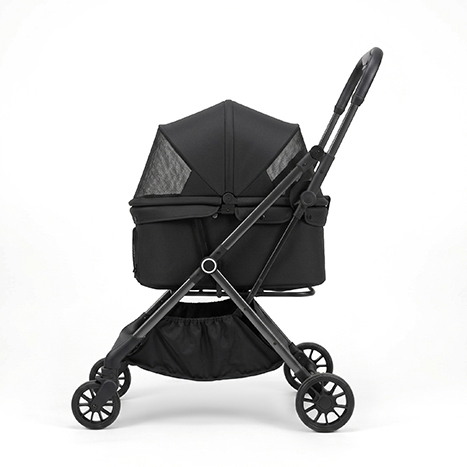
Q7 was designed around this balance, featuring a 50 × 20 × 44.8 cm folded size, 6.5 kg weight, full recline, and self-standing fold.
It won't match YOYO³'s brand recognition or Butterfly's design identity. The accessory ecosystem is also more limited compared with established premium brands. What Q7 offers is a practical cabin size stroller solution with flexible customization options and direct OEM/ODM support for brands looking to develop their own travel stroller collections.
Who it's for: Brands, distributors, and retailers seeking a reliable OEM cabin stroller partner with product development experience.
How to Choose: 3 Questions That Matter More Than Specs
1. Is this your only stroller, or a second one?
Primary stroller: the Minu V3 or Metro+ are the honest recommendations — built for daily use that happens to travel. Supplementing a full-size stroller at home: the MamaZing Ultra Air X or Zoe Traveler's extreme compactness becomes more valuable than their daily usability trade-offs.
2. How often do you fly, and with which airlines?
Once or twice a year on major carriers: cabin compliance matters less than daily usability — buy for your typical week. More than four times a year, or regularly on low-cost carriers: the dimensional specs in the table above become hard purchasing criteria, not background detail.
3. What does your typical Tuesday look like?
Buy the stroller that fits ordinary life, not the annual trip. A stroller optimized for airport overhead bins but frustrating for daily errands gets replaced within a year. The best travel stroller is the one you actually use every day.
Frequently Asked Questions
What size stroller fits in an airplane cabin?
Most major airlines accept strollers folded to approximately 55 × 40 × 20 cm or smaller in overhead compartments, though policies vary by carrier, aircraft type, and cabin class. Always confirm with your specific airline before travel — policies change and are not standardized.
What is the lightest cabin size stroller in 2026?
The MamaZing Ultra Air X leads at 4.5 kg. Among full-featured options with proper canopy, recline, and seat padding, the Zoe Traveler at 5.9 kg and Babypie Q7 at 6.5 kg offer strong weight-to-usability ratios. The Stokke YOYO³ and Cybex Coya both weigh 6.6 kg at the premium end.
Can a travel stroller work as your only everyday stroller?
Yes , and most buyers in 2026 intend exactly that. The UPPAbaby Minu V3 and Ergobaby Metro+ are designed with daily use as the primary function. Check seat depth, canopy coverage, and basket capacity before buying — these matter more for daily use than folded dimensions do.
Are cabin size strollers safe for newborns?
Most are rated from 6 months. For newborn use, look for a full flat recline or a compatible newborn insert — the Stokke YOYO³ and Bugaboo Butterfly 2 both have verified newborn solutions. Confirm compliance with EN 1888-1:2018 (Europe) or ASTM F833 (North America) before purchase.
What's the difference between a travel stroller and a cabin size stroller?
"Travel stroller" covers any lightweight foldable stroller. "Cabin size stroller" is more specific: it means the stroller meets airline overhead bin dimensions when folded. All cabin size strollers are travel strollers; not all travel strollers are cabin-size compliant.
How long do cabin size strollers last?
Hinge quality is the primary lifespan variable. Premium-tier strollers target 5,000+ fold cycles — equivalent to several years of daily use. Mid-market durability varies significantly; a published cycle-test rating or a frame warranty of 2+ years is the most reliable proxy signal when shopping.
Safety note: Always verify that any stroller meets the certified standards for your market — EN 1888 in Europe, ASTM F833 in the United States, AS/NZS 2088 in Australia. Specifications above are sourced from manufacturer official pages and verified independent testing data as of Q2 2026 and are subject to change. For OEM or wholesale inquiries regarding the Babypie Q7, contact our team →.