
.jpg)
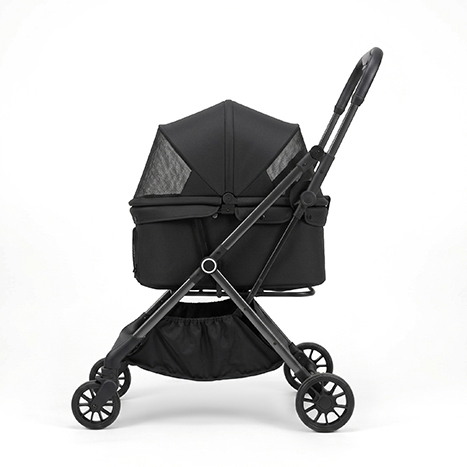


Last spring, a family of three stood at the gate of a connecting flight in Chicago, watching their "travel stroller" get tagged for oversized gate-check — the same stroller the box had promised was "compact and cabin-friendly." They ended up carrying a sleeping toddler through a packed terminal while wrestling a diaper bag and two carry-ons. The stroller wasn't defective. It just wasn't built for what they needed: a travel stroller for airplane travel, not just a stroller that folds small in a living room.
That gap — between "compact" and "actually works on a plane" — is where most buying mistakes happen. This guide walks through exactly what to check before you buy, using the same criteria flight-heavy parents and gate agents rely on.
What Is a Travel Stroller for Airplane Travel?
A travel stroller is a stroller designed around one job: getting through an airport and onto a plane with minimal friction. That's a different design brief than a everyday stroller, which is built for comfort, storage, and all-terrain use over months or years of daily walks.
The core differences come down to three things:
- Folded size. A travel stroller needs to fold small enough to fit in an overhead bin or a gate-check bag, not just fit in a car trunk.
- Weight. Airports mean carrying the stroller up jet bridges, down aisles, and through security lines — often one-handed, often with a child in the other arm.
- Fold speed and simplicity. You need to close it fast, sometimes seconds before boarding, sometimes with a baby on your hip.
This is why the category has split into three loose groups:
- Umbrella strollers — Lightweight and cheap, but usually lack a flat recline, sun canopy, or structural support. Not ideal for long travel days or newborns.
- Compact fold strollers — Mid-range options that balance portability with features. Some fit in overhead bins; many don't.
- Cabin-approved strollers — Specifically designed to meet airline carry-on size limits. These are the ones this guide focuses on.
The differences between these categories are not always obvious from product photos. A stroller can be "compact" without being "cabin-sized." Understanding this distinction is the single most important step before you buy.
Why Most "Travel Strollers" Aren't Actually Cabin Approved
Here's the problem: "travel stroller" is a marketing term, not a regulated standard. Any manufacturer can call their product a travel stroller. But cabin approved stroller implies something specific — that the stroller's folded dimensions meet airline carry-on requirements.
The International Air Transport Association (IATA) recommends a carry-on size of 55 × 40 × 20 cm (including wheels and handles). Most major airlines follow this guideline, though some allow slightly more and a few allow less.
A stroller that folds to 55 × 45 × 25 cm might look compact in your living room. It won't fit in most overhead bins.
The issue is that many popular strollers marketed as "cabin size stroller" options exceed these dimensions by just a few centimeters — enough to be rejected at the gate. And whether a gate agent enforces the limit depends entirely on the airline, the airport, and frankly, the mood of the moment. You don't want your travel plan to rely on luck.
Before trusting any "cabin approved" claim, check the actual folded dimensions listed in the product specs — and compare them against your specific airline's requirements.
5 Things to Check Before You Buy a Travel Stroller for Flights
1. Folded Dimensions — Measure This, Not the Open Size
Every stroller listing leads with the open size, because that's what looks impressive in a photo. It's also almost useless for air travel. What matters is the folded footprint, because that's the number an airline's sizing rules and gate-check bins actually care about.
When comparing strollers, look specifically for the folded dimensions in centimeters or inches, and check them against the airline's stated limits — not against a generic "compact" label. A stroller advertised as "compact" that folds to 60 x 45 x 25 cm will still get gate-checked on most airlines, because it exceeds the standard cabin baggage envelope. A stroller that folds to something like 50 x 45 x 20 cm has real headroom to spare.
| Airline | Carry-On Size Limit | Notes |
| Ryanair | 55 × 40 × 20 cm | Strictly enforced; measured at gate |
| EasyJet | 56 × 45 × 25 cm | Slightly more generous |
| Delta | 56 × 35 × 23 cm | Varies by aircraft type |
| United | 56 × 35 × 22 cm | Sizers used at many hubs |
| Emirates | 55 × 38 × 20 cm | Enforced consistently |
| ANA | 55 × 40 × 25 cm | Domestic flights may differ |
| Singapore Airlines | 55 × 36 × 23 cm | Among the stricter limits |
Key takeaway: If your stroller fits in the overhead compartment on Ryanair, it'll likely fit everywhere. Use the tightest standard as your benchmark.
A parent traveling frequently between Dublin and Barcelona shared that she always checks Ryanair's limit first — "If it passes Ryanair, it passes anything."
2. Weight — Your Stroller Counts Toward Carry-On Allowance
Many parents forget this: if you bring a stroller into the cabin, its weight counts toward your carry-on baggage allowance. Most airlines set carry-on weight limits between 7 and 10 kg.
A 9 kg stroller technically fits in the overhead bin? Great — but it leaves you almost no weight allowance for anything else in your carry-on bag.
The practical recommendation: look for a stroller under 7 kg. Ideally, between 5.5 and 6.9 kg. This gives you enough remaining allowance for diapers, a change of clothes, and snacks — the essentials you'll need within reach during the flight.
A lightweight stroller for airplane travel shouldn't just be light enough to lift — it should be light enough to leave room for everything else you're carrying.
3. One-hand fold — a necessity, not a luxury
Picture the actual moment: you're at security, your child is fussing, a line is forming behind you, and you need to fold the stroller to send it through the X-ray belt — while holding your child with your free arm. This is the single most common real-world failure point for strollers that look great in a showroom but weren't designed for solo, one-handed operation.
A true one-hand fold travel stroller should collapse with a single motion — one lever, one button, one pull — not a two-handed sequence that requires setting the child down first. If you can't test this in person before buying, look for video demonstrations in product listings or reviews rather than trusting a spec sheet alone.
4. Self-standing after folding
This sounds minor until you're standing at a boarding gate juggling boarding passes, passports, and a diaper bag, and the folded stroller won't stay upright without leaning it against a wall — or worse, falling over into the aisle. A stroller that stands on its own once folded frees up your hands and keeps it out of the way in tight gate areas, aircraft aisles, and taxi trunks. It's a small engineering detail, but it shows up in daily use more than almost any spec on the box.
5. Newborn Compatibility
This one catches a lot of first-time parents off guard. Many travel strollers are rated for babies 6 months and older only — meaning the seat doesn't recline flat enough for a newborn, or the harness system isn't designed for very small infants.
If you're planning to travel with a baby under 6 months, you need a newborn travel stroller airplane-ready option with a near-flat recline (ideally 170–175°), adequate head and neck support, and a harness that adjusts small enough.
One father traveling with his 3-month-old from New York to Tokyo learned this the hard way. His stroller's minimum recline was 140° — nowhere near flat enough for safe newborn sleep. He ended up carrying his daughter in a wrap for the entire layover, with an unusable stroller folded beside him.
Before buying, check the minimum age rating and the maximum recline angle. Don't assume all travel strollers work from birth.
Mistakes to Avoid When Buying a Travel Stroller
Even parents who do their homework tend to fall into a few recurring traps:
- Trusting the word "compact" on its own. As covered above, it's a marketing term, not a measurement. Always check the folded dimensions in centimeters.
- Assuming all airlines follow the same rule. A stroller that rides in the cabin on one airline may be gate-checked on another, especially on budget carriers.
- Buying based on open size or seat comfort alone. These matter for daily strolls, not for clearing security and boarding.
- Ignoring the fold mechanism until the airport. Practice folding and unfolding the stroller at home, one-handed, before your trip — not for the first time at the gate.
- Overlooking accessories that add bulk. Cup holders, large canopies, and storage baskets can add weight and folded size that push a stroller past cabin limits.
Airline Rules You Should Know
The table earlier in this guide covers folded size and weight limits, but a few additional rules are worth knowing regardless of which airline you fly:
- Strollers gate-checked at the door are typically returned at the aircraft door on arrival, not at baggage claim — though this varies by airport and airline.
- Damage to gate-checked strollers is common enough that many frequent flyers use a padded travel bag, even for short flights.
- Most airlines don't count a stroller against your checked baggage allowance if it's gate-checked, but policies differ for strollers checked at the ticket counter versus the gate.
- International carriers sometimes apply stricter size limits than domestic ones on the same aircraft type, so re-check the rules for each leg of a multi-airline itinerary.
What Makes a Great Cabin Travel Stroller
Pulling all of the above together, a genuinely cabin-ready travel stroller needs to hit five marks at once: a folded size comfortably inside the tightest common carry-on limits, a weight light enough to carry one-handed through a terminal, a true one-hand fold mechanism, the ability to stand on its own once folded, and full compatibility from newborn age onward. Very few strollers on the market check all five boxes simultaneously — most trade one for another.
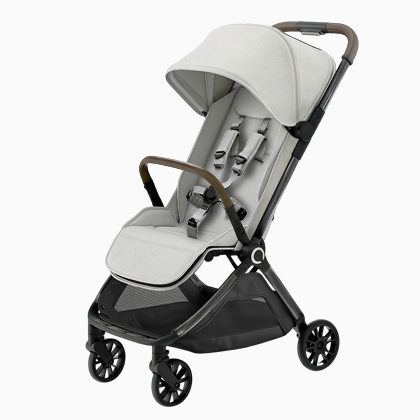
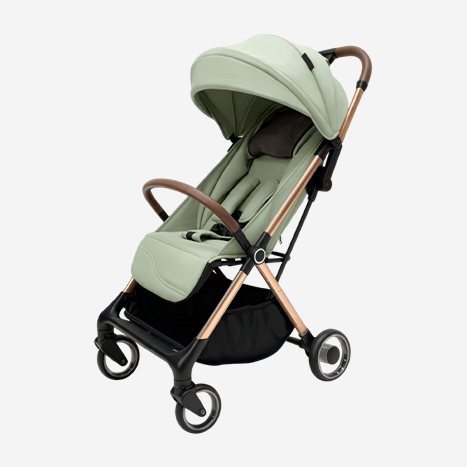
The BabyPie cabin stroller was designed with exactly these criteria in mind — folding to 50 x 44.8 x 20 cm at just 6.5 kg, with a one-hand fold mechanism and full newborn compatibility.
[View product →]
FAQ
Which strollers are cabin approved?
A stroller is cabin approved when its folded dimensions fall within an airline's carry-on baggage limits, generally around 55 x 40 x 20 cm. Always verify against the specific airline you're flying, since limits vary by carrier and sometimes by aircraft type.
What size stroller fits in overhead bin?
Most overhead bins accommodate items up to roughly 55 x 40 x 20 cm, matching standard cabin baggage allowances. A stroller folding to that size or smaller has a realistic chance of fitting in the bin, though space isn't guaranteed on a full flight.
Can you take a stroller as carry-on?
On many airlines, yes — if the folded stroller meets carry-on size limits and cabin space allows. Budget carriers are more likely to require gate-checking regardless of stroller size, so it's worth checking the specific airline's stroller policy before you fly.
What is the lightest travel stroller?
Weights vary by model and change as new strollers launch, but strollers designed specifically for air travel typically fall in the 5.5 kg to 7 kg range, compared to 9-13 kg for standard everyday strollers.
Do I need to gate-check my stroller?
Only if it doesn't meet the airline's cabin baggage size limits, or if the airline's policy requires all strollers to be gate-checked regardless of size — which is common on some low-cost carriers. Gate-checking is free on virtually all airlines and the stroller is typically returned at the aircraft door on arrival.
Final Thoughts
Choosing the right travel stroller comes down to three non-negotiables: folded dimensions within cabin limits, a weight under 7 kg, and a fold mechanism you can operate with one hand. Get these right, and traveling with a baby becomes significantly easier.