
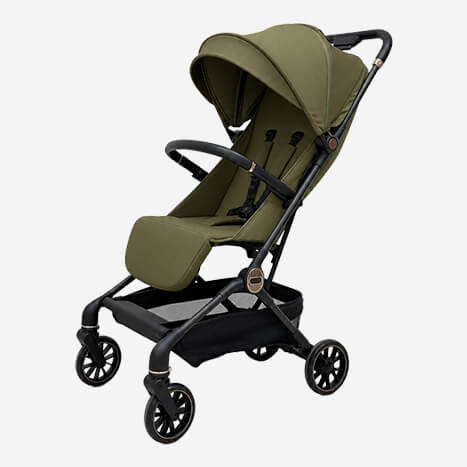
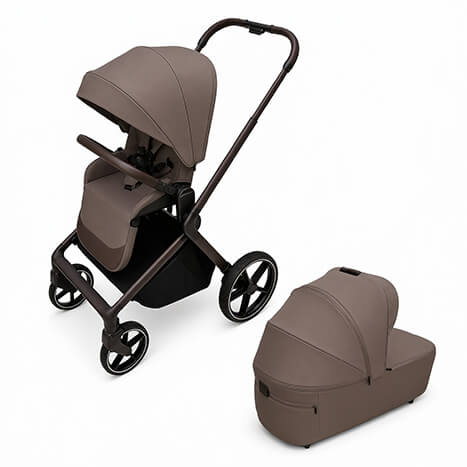
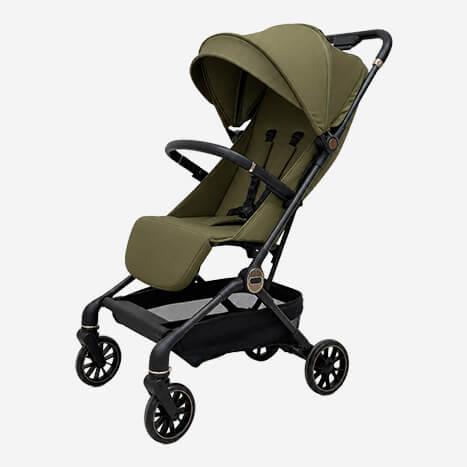
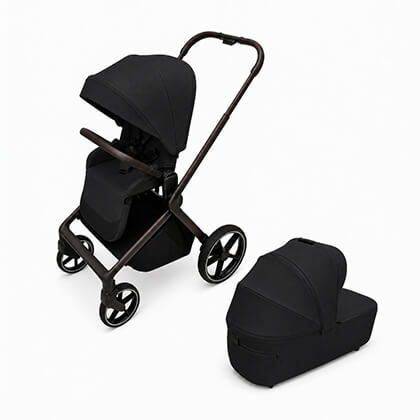




Article Summary: A truly compact lightweight stroller requires more than lightweight materials. Frame architecture, tube specifications, wheel arrangement, component integration, and folding mechanisms all play an important role in reducing folded dimensions and improving ease of use. In this article, we explore the key engineering considerations behind compact stroller design, including three-section folding structures, linkage mechanisms, and gravity-assisted folding. We also look at how these design principles can be applied in stroller product development and OEM/ODM manufacturing.
A lightweight stroller is about much more than using lightweight materials. Its overall weight, folded dimensions, and ease of operation all depend on how the frame is engineered, how individual components are arranged, and how the different mechanisms work together.
For stroller manufacturers, developing a travel stroller that is easy to carry and store requires careful consideration of several factors: material selection, frame construction, wheel arrangement, component integration, and the folding mechanism.
So, how can a lightweight stroller achieve both low weight and a compact fold? Let’s look at several key design considerations and explore how these principles are applied in one of our carbon fiber strollers.
1. Frame Design: Balancing Lightweight Construction and Structural Rigidity
The frame is the foundation of a stroller. The choice of material, tube specifications, and overall layout all influence its weight, rigidity, and structural performance.
When developing a lightweight stroller, material selection is only the first step. Tube diameter, cross-sectional shape, and the way individual frame tubes are connected also need to be carefully considered.
Carbon fiber is a suitable material for lightweight stroller frames. Compared with commonly used aluminum tubing, carbon fiber offers a high strength-to-weight ratio and stiffness-to-weight ratio. With an appropriate structural design, it can help keep the frame lightweight while providing good rigidity.
Tube specifications also affect frame performance. For a round tube, its outer diameter, wall thickness, and material properties all influence its bending stiffness. Under otherwise similar conditions, increasing the tube's outer diameter can increase its second moment of area, which in turn improves its resistance to bending.
Lightweight strollers on the market use carbon fiber tubes in different diameters, depending on their positioning and structural requirements. The main frame tubes of our carbon fiber stroller have an outer diameter of 19 mm. This specification is not simply about choosing a larger tube. It reflects a balance among frame rigidity, overall weight, folding space, and manufacturing cost.
Compared with smaller-diameter tubes, a 19 mm tube provides a larger cross-sectional design space and can also offer more room for the placement and integration of internal metal fittings. Combined with the overall frame geometry, this design takes both structural requirements and appearance into account.
The distinctive woven texture of carbon fiber also gives the frame a look that differs from conventional metal tubing, complementing the premium positioning of a lightweight stroller.
Material selection, therefore, is not simply an aesthetic choice or an additional product feature. It is an important part of the overall frame design.
2. Folding Architecture: How Does the Frame Fold into a Compact Package?
A stroller's folded dimensions depend not only on the size of the frame when unfolded, but also on the movement paths of its structural components and how they fit together when folded.
Different folding architectures create different movement paths. The key is to coordinate the front frame, seat-support frame, and rear frame so that they move together and nest neatly, minimizing unused space.
A three-section folding structure is one approach commonly used to achieve a compact fold in lightweight travel strollers. Its value is not simply that the stroller folds in three sections. Rather, the coordinated movement and overlapping arrangement of different frame sections help reduce the overall folded dimensions.
Our carbon fiber stroller uses a three-section frame structure consisting of:
-
Front wheel frame
-
Seat-support frame
-
Rear wheel frame
During folding, these three sections move in coordination through the linkage mechanism, gradually drawing together to form a more compact package.
The canopy also needs to be considered as part of the folding design. If its support structure cannot move with the frame, it may interfere with the folding process or take up additional space once the stroller is folded.
For this reason, the canopy support arms on our stroller feature articulated joints. These allow the canopy frame to fold along with the stroller, helping prevent it from obstructing the overall folding movement.
A compact fold, therefore, is not achieved through a single folding joint. It requires coordinated design between the main frame and its attached components.
3. Component Layout: Making Better Use of Every Inch of Folding Space
Even when the main frame has an efficient folding structure, the arrangement of components such as the wheels and bumper bar can still affect the final folded dimensions.
Wheel arrangement is a good example.
On compact strollers, the relative positions of the front and rear wheels affect how much space the wheel assemblies occupy when folded. Many lightweight strollers are designed with a narrower rear track than front track. This arrangement is influenced by the steering configuration and overall frame layout, and it can also help make better use of space during folding.
Why not reverse the front and rear track widths?
The answer depends on the different roles of the front and rear wheels, the frame layout, and the folding path. The front wheels are typically swivel wheels that provide steering, while the rear wheels mainly provide rolling support and braking. The appropriate relationship between the front and rear track widths needs to be matched to the stroller's center of gravity, wheel dimensions, and frame structure. A wider track does not automatically mean greater stability in every design.
Our stroller has a wider front wheel track and a narrower rear wheel track. This arrangement allows the rear wheel assembly to move inward between the two front wheels during folding. As a result, the space between the front wheels is used more efficiently, reducing the lateral space occupied by the wheel assemblies in the folded position.
The bumper bar is another component that needs to be considered.
A fixed bumper bar that remains outside the frame after folding can increase the stroller's overall folded dimensions. To address this, our stroller uses a sliding bumper bar. During folding, the bumper bar slides inward along the frame and is eventually tucked inside the frame structure rather than protruding outward.
Careful positioning of components such as the wheels and bumper bar helps reduce external protrusions and makes the folded stroller more compact.
With these structural and layout considerations, the stroller achieves folded dimensions of approximately 50 × 45 × 23 cm.
4. Folding Mechanism: How Can Linkages Make Folding Easier?
The folding mechanism does more than connect different sections of the frame. It also determines how those sections move and how much force the user needs to apply during operation.
In a linkage system, the positions of the pivots and connection points, as well as the angles of movement, all affect the mechanism's transmission characteristics. One important mechanical concept is the moment arm.
In simple terms, the moment arm is the perpendicular distance between a pivot and the line of action of a force. When the force and its direction remain the same, a longer moment arm generally produces greater torque.
With a well-designed linkage layout, optimizing the positions of the connecting links in relation to the pivots can improve force transmission and help the frame move more smoothly. It can also help reduce the effort required from the user during folding.
On our stroller, the drive linkage is positioned farther from the pivot, creating a relatively long effective moment arm. As the stroller folds, the linkage transfers movement to the different frame sections, helping make the folding action easier.
For a lightweight travel stroller, these details matter. The user experience is shaped not only by how much the stroller weighs, but also by how easy it is to open and fold. The design of the folding mechanism can have a direct impact on everyday operation.
5. Gravity-Assisted Folding: Making the Folding Process Smoother and Easier
Alongside frame construction and linkage layout, the folding operation itself is another important consideration in lightweight stroller development.
Gravity-assisted folding is a design approach that uses the stroller's own weight to help guide the frame into its folded position. With the frame, pivots, and linkages arranged appropriately, releasing the folding lock and lifting the handlebar allows the lower part of the frame to swing under gravity. The linkage system then transfers this movement to other sections, helping them fold inward.
Compared with a design that relies entirely on the user to push each component into place, gravity-assisted folding uses the frame's own weight to contribute to the folding movement and can reduce some of the manual effort required.
This approach offers several potential benefits:
1. Less manual effort during folding
After the mechanism is unlocked, the stroller's own weight helps move the lower frame toward the folded position. This reduces the need for the user to continuously press down or manually bring each section together.
2. Coordinated movement of multiple components
The support rods and linkages work together to guide the front and rear frame sections, as well as the seat-support structure, along their intended movement paths. This reduces the need to adjust several components separately.
3. A more coordinated folding experience
A well-considered center of gravity and linkage arrangement can make the folding movement more continuous. For lightweight travel strollers, an intuitive operation and smooth folding process are important parts of the overall user experience.
Our carbon fiber stroller incorporates a gravity-assisted folding mechanism. The process works as follows:
-
Unlock with two buttons: Press the two separate release buttons simultaneously to release the locking pin at the main folding joint.
-
Allow gravity to assist the fold: The lower frame swings downward under gravity. The movement is transferred through the support rods and linkages, bringing the rear frame and seat-support structure closer to their folded positions.
-
Complete the fold with a slight push: As the frame approaches the folded position, the user can give it a gentle push or make a small adjustment to complete the folding process.
Gravity-assisted folding does not mean that the stroller folds completely by itself. The principle is to use gravity as part of the mechanism's movement, together with the linkage system, to reduce the manual effort needed to fold the frame.
At the same time, the safety of the folding mechanism must also be considered. Since gravity contributes to the folding movement, the release system should help prevent the mechanism from being triggered accidentally during handling or everyday use.
Our stroller therefore uses a dual-button release design. Both independent buttons must be pressed at the same time to release the main folding lock. This two-action release mechanism helps reduce the risk of accidental activation and provides an additional safeguard during operation.
Conclusion: The Details Behind a Well-Designed Lightweight Stroller
Creating a truly compact and lightweight travel stroller involves much more than choosing lightweight materials or adding a folding function.
From frame materials and tube specifications to the three-section folding architecture, wheel arrangement, component integration, linkage transmission, and gravity-assisted folding, every element needs to be considered in relation to the stroller's overall weight, folded dimensions, and ease of use.
Our carbon fiber stroller brings these design considerations together in one frame system: 19 mm carbon fiber main frame tubes, a three-section folding structure, space-efficient component layout, and a gravity-assisted folding mechanism. Together, these features form the structural basis for its lightweight design and compact fold.
For baby brands, importers, and product development teams, understanding these structural details can help create products that better balance weight, folded size, frame design, and user experience.
Babypie specializes in the development and manufacturing of baby products, offering OEM and ODM stroller solutions for brands, importers, and distributors. If you are looking for a manufacturing partner to develop a new lightweight travel stroller, contact our team to discuss your product concept and project requirements.
FAQ
1. What factors should brands consider when developing a lightweight stroller?
Brands should consider more than just the stroller's overall weight. Key factors include frame materials, structural rigidity, folding architecture, wheel arrangement, component integration, folded dimensions, and ease of operation. These elements need to work together to create a stroller that meets the target market's requirements and intended product positioning.
2. Can lightweight stroller frames be customized for different brands?
Yes. Depending on the project requirements, stroller frame design can be adapted in terms of structure, materials, dimensions, colors, and selected components. OEM and ODM projects allow brands to develop products that align with their own design concepts, market positioning, and functional requirements.
3. Does Babypie support OEM and ODM stroller development?
Yes. Babypie provides OEM and ODM manufacturing services for baby stroller brands, importers, and distributors. Depending on the project, we can work with customers on product design, structural development, material selection, component customization, and production.
4. Can manufacturers help improve an existing stroller's folding mechanism?
Yes. Existing stroller designs can be reviewed to identify opportunities to improve the folding structure, component arrangement, and linkage configuration. The specific development approach depends on the original frame design, technical requirements, and intended improvements.
5. What information is needed to start a custom stroller development project?
A preliminary product concept, reference images, design drawings, or an existing sample can help establish the development direction. It is also useful to define the target market, key functions, material preferences, expected folded dimensions, and estimated order quantity. These details help the manufacturing team evaluate the project and discuss the next development steps.
6. Can Babypie customize the frame and folding structure of a lightweight travel stroller?
Depending on the project scope and technical feasibility, Babypie can discuss customization of frame structures, folding mechanisms, wheel arrangements, and selected components. For example, our carbon fiber stroller combines a three-section folding structure with a gravity-assisted folding mechanism. Similar concepts can be evaluated according to each brand's product requirements.
7. What should brands look for when choosing a stroller manufacturer?
Brands should evaluate a manufacturer's product development capabilities, engineering experience, production facilities, quality control processes, and ability to support customization. It is also important to understand how the manufacturer manages sampling, product testing, production planning, and communication throughout the project. A suitable manufacturing partner should be able to support both product development and long-term production needs.