



TL;DR: Carbon fiber is the better fit for ultra-lightweight, premium, travel-focused strollers, because it lets designers cut frame weight and stand out on the shelf. Aluminum is the better fit for cost-sensitive, everyday and full-featured strollers, thanks to mature supply chains and flexible production. Neither material is automatically stronger or safer. The finished stroller's design, manufacturing quality and certification testing matter more than the material name.
For baby brands, importers and wholesalers, the frame material shapes a stroller's weight, cost, positioning and testing requirements. Aluminum has long been the industry standard. Carbon fiber is now emerging as a credible option for brands building lightweight, travel-friendly collections.
This guide compares carbon fiber and aluminum stroller frames across weight, strength, durability, corrosion resistance and cost. It also explains what to look for when sourcing a lightweight stroller from an OEM/ODM manufacturer.
Quick Comparison: Carbon Fiber vs. Aluminum Stroller Frames
| Factor | Carbon Fiber | Aluminum |
| Weight | Very high strength-to-weight ratio; composite density is roughly 1.5-1.6 g/cm³ | Lightweight; common alloys are roughly 2.7 g/cm³ |
| Stiffness | High potential, depending on fiber orientation | Depends on alloy, tube size and frame structure |
| Strength | Depends on composite design and layup | Depends on alloy, wall thickness and temper |
| Impact behavior | Can be sensitive to localized impact; some damage is less visible | Can dent or deform under excessive impact; damage is usually visible |
| Corrosion | Does not rust; metal joints and fasteners still need protection | Good natural resistance through an oxide layer, improved by surface treatment |
| Manufacturing | More specialized processes | Mature tube forming, welding and finishing |
| Material cost | Generally higher | Generally more economical |
| Best for | Ultra-light, premium and travel strollers | Everyday, cost-effective and versatile strollers |
These are general material characteristics, not guaranteed performance ratings. Actual performance depends on engineering, manufacturing quality and testing.
What Is a Carbon Fiber Stroller Frame?
Carbon fiber is a composite material made from extremely thin carbon fibers bonded with a resin matrix. It is known for its high strength-to-weight ratio and is used wherever low weight and structural performance matter.
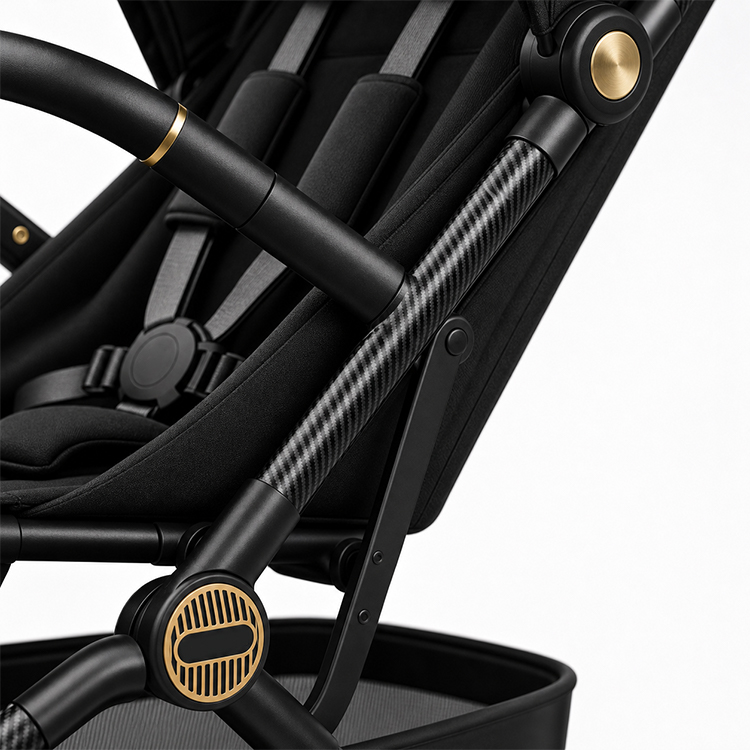
In stroller manufacturing, carbon fiber offers ways to reduce frame weight while keeping the structural performance the design requires. Key characteristics include:
- Lightweight potential: A high strength-to-weight ratio suits ultra-light stroller development.
- Structural stiffness: With properly engineered fiber orientation and layup, designers can build rigid frames.
- Design flexibility: Carbon fiber components can be shaped to specific product requirements.
- Brand differentiation: It gives brands a clear way to set a lightweight collection apart.
Carbon fiber is not automatically stronger or more durable in every application. Performance depends on fiber quality, resin system, layup design, manufacturing process and structural engineering, so design validation and product testing are essential.
What Is an Aluminum Stroller Frame?
Aluminum is one of the most widely used materials in stroller frame manufacturing. It is valued for its relatively low weight, established production methods and versatility across frame structures.
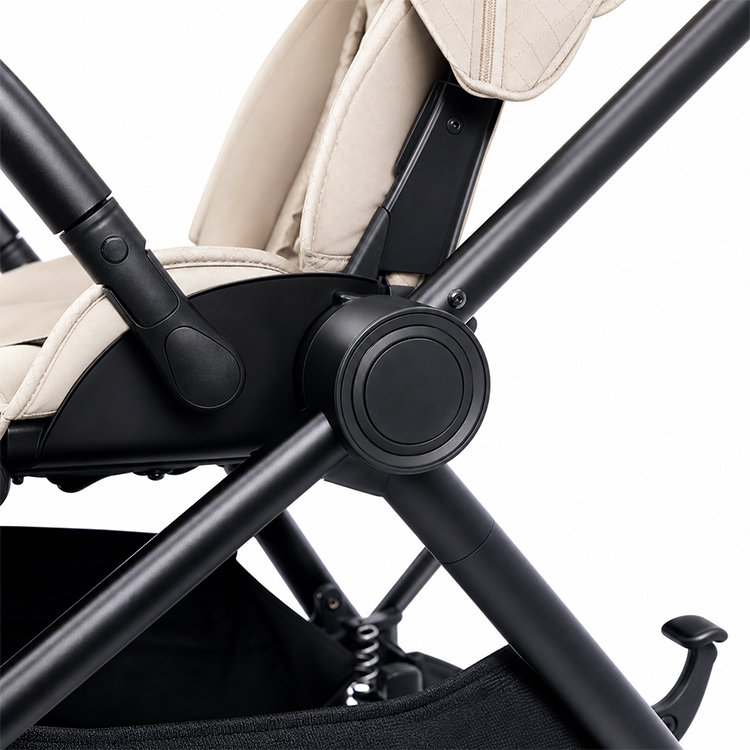
Aluminum frames are typically made through tube forming, cutting, welding and surface finishing. Key characteristics include:
- Established technology: Mature processing methods and a deep supply chain.
- Practical weight: A useful balance between weight and structural performance.
- Cost efficiency: Generally more economical than carbon fiber for most applications.
- Design versatility: Tubes and components can be formed into many frame configurations.
Aluminum also resists corrosion well, although actual performance depends on the alloy, surface treatment and operating environment. For everyday strollers, travel systems and many other categories, it remains a practical choice.
Carbon Fiber vs. Aluminum Stroller Weight
Weight is the main reason brands consider carbon fiber. Its high strength-to-weight ratio, and a density well below that of common aluminum alloys, gives designers room to develop lighter structural components. Aluminum is also a lightweight engineering material and is widely used in portable stroller designs.
However, the frame is only part of the total. Final stroller weight also depends on frame geometry, tube dimensions, wheels, seat, canopy, folding mechanism and accessories. A well-engineered aluminum stroller can be lighter than a poorly optimized composite one.
What this means for brands: If lightweight portability is a core selling point, carbon fiber may offer additional design opportunities. Always compare complete stroller weight, not materials in isolation.
Strength and Structural Performance
Carbon fiber composites can deliver excellent specific strength and stiffness when properly engineered. Their mechanical properties are directional, so fiber orientation and composite construction strongly influence results.
Aluminum offers predictable, well-understood mechanical properties and is used in many structural applications. Its performance depends on alloy, component dimensions and frame design.
Neither material should be judged by name alone. Frame geometry, joints, connections and manufacturing quality all determine how the finished stroller performs.
Durability and Impact Resistance
Strollers face rough surfaces, repeated folding and unfolding, and heavy daily handling, so durability matters.
Aluminum frames can deform under excessive impact or loading, and the damage is usually easy to see. Carbon fiber composites offer excellent stiffness but can be more sensitive to certain localized impacts, and some composite damage is less visible than a dent in metal.
For both materials, buyers should require structural validation, impact evaluation and repeated-use testing on the complete stroller.
Corrosion Resistance and Maintenance
Carbon fiber does not rust like conventional steel, but composite structures still need careful protection and joint design where they meet metal components. Aluminum forms a natural protective oxide layer and can receive additional surface treatments such as anodizing for appearance and corrosion resistance.
For both materials, surface finishing, fasteners, connection quality and clear maintenance instructions make a difference.
Manufacturing Cost: Carbon Fiber vs. Aluminum
Aluminum benefits from established processes and a mature supply chain, making it practical for a wide range of price points. Carbon fiber typically involves more specialized raw materials and manufacturing steps, which raises production cost.
For brands targeting the lightweight or premium segment, that extra cost can be part of the product's positioning. Final cost also depends on product structure, order quantity, customization requirements and production efficiency, so request quotes for your specific configuration.
Which Material Is Better for a Lightweight Baby Stroller?
There is no single answer. The better material depends on the product's application and the brand's priorities.
Carbon fiber may be worth considering when:
- You want to build an ultra-lightweight stroller collection.
- Portability is a major selling point.
- You are targeting travel-oriented or premium segments.
- You want clear material differentiation.
Aluminum may be the practical choice when:
- You need a cost-effective frame solution.
- You want to rely on established manufacturing processes.
- The stroller is designed for everyday use.
- You need a wide range of frame configurations and production options.
The decision should weigh product weight, structural design, safety requirements, production cost and target customer expectations together.
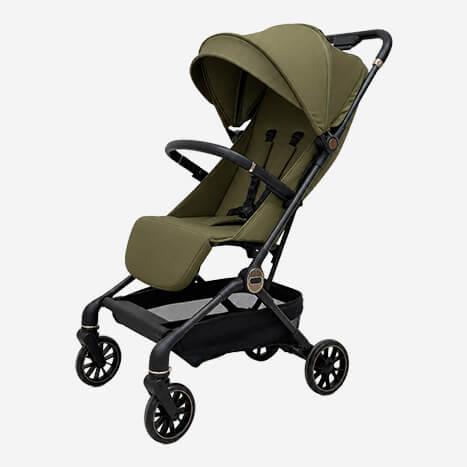
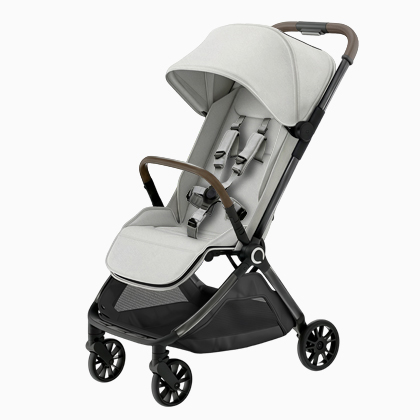
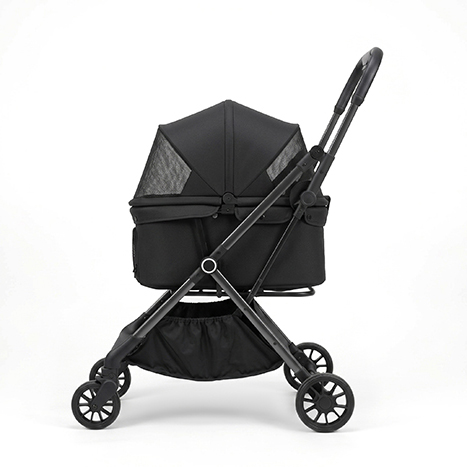
Babypie Q2: A 5.1 kg Carbon Fiber Stroller for OEM/ODM Projects
For brands exploring carbon fiber, Babypie's Q2 shows how the material can be built into a compact, travel-oriented stroller. It pairs a carbon fiber frame with practical features for everyday mobility.
Key features
- 5.1 kg net weight: Easier to lift, carry and transport.
- Carbon fiber frame: Carbon fiber integrated into the stroller's frame design.
- One-hand, one-button folding: Simple folding for everyday use.
- Compact folded size: Smaller than a 20-inch suitcase for convenient storage and travel.
- Three-position backrest adjustment: Flexibility for different seating and resting needs.
Q2 is an example of how material selection, portability and functional design can work together, rather than relying on frame material alone.
How to Source a Lightweight Baby Stroller: A Buyer's Checklist
Choosing the material is only one part of product development. Finding a reliable manufacturing partner matters just as much. Before you commit, check the following.
1. Complete product specifications. Evaluate total stroller weight, folded dimensions, maximum load capacity, folding mechanism and features.
2. Structural design and testing. Ask about frame construction, connection points, folding-cycle testing, impact testing and in-process quality control.
3. Market-specific safety standards. Requirements differ by region. Common references include EN 1888 for Europe, ASTM F833 for the United States and GB 14748 for China. Confirm which apply to your market and ask the supplier for current test reports.
4. OEM and ODM flexibility. Check whether the manufacturer supports custom colors, fabrics, logos, packaging and product configuration changes.
5. Manufacturing experience. Established production processes and quality control reduce risk in both development and mass production.
Work With Babypie on Your Next Baby Stroller Project
Babypie is a baby products manufacturer providing OEM and ODM solutions for international baby brands, importers and wholesalers. Our range includes baby strollers, baby cribs, high chairs, rockers and other maternal and infant products.
For lightweight stroller projects, we can support customization in:
- Fabric and material selection
- Colors and logo customization
- Packaging design
- Product structure and configuration
- OEM and ODM manufacturing cooperation
Whether you want to source an existing lightweight stroller or develop a new one, our team is ready to discuss your requirements.
Looking for a carbon fiber stroller manufacturer for your brand? Contact Babypie to learn more about the Q2 and explore OEM/ODM cooperation.
FAQ
Is carbon fiber better than aluminum for baby strollers?
Not necessarily. Carbon fiber offers a high strength-to-weight ratio and suits ultra-lightweight development. Aluminum offers mature manufacturing and a cost advantage. The better choice depends on the stroller's design, price target and intended use.
Are carbon fiber strollers lighter than aluminum strollers?
Carbon fiber can reduce the weight of certain structural components. Overall stroller weight also depends on frame design, wheels, seat, canopy and accessories, so compare complete products.
Are carbon fiber stroller frames durable?
Durability depends on material quality, fiber orientation, manufacturing process, structural design and impact resistance. Testing on the finished stroller is the only reliable way to verify performance.
What are the advantages of a lightweight baby stroller?
A lightweight stroller is easier to lift, carry, transport and store. It is especially useful for families who travel often or need a compact stroller for daily mobility.
Can stroller manufacturers provide OEM and ODM services?
Yes, depending on their capabilities. Manufacturers such as Babypie can customize fabrics, colors, logos, packaging and product configurations to match a brand's requirements.
Where can brands find a carbon fiber stroller manufacturer?
Brands, importers and wholesalers can work directly with specialized stroller manufacturers such as Babypie to evaluate specifications, customization options, production capacity and quality requirements. Contact Babypie to discuss OEM/ODM carbon fiber stroller projects.