.jpg)


Why Regulatory Differences Matter
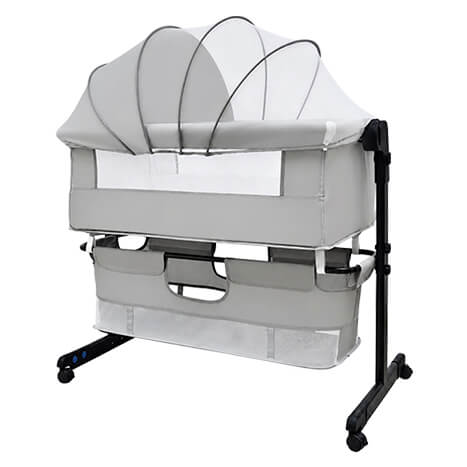
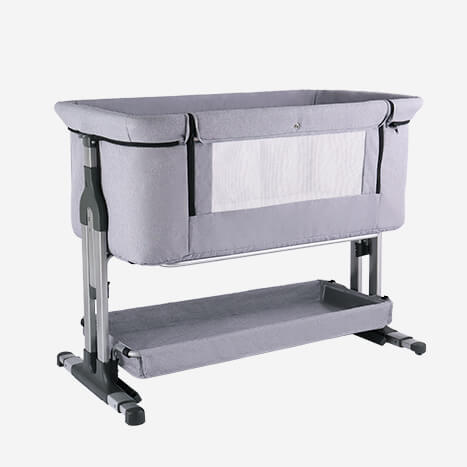
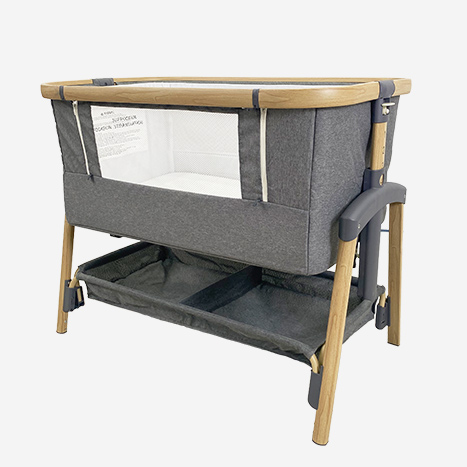
Bedside sleepers face stringent safety regulations in both European and US markets. While EN 1130 and US CPSC bedside sleeper rules share the same goal—preventing infant suffocation, entrapment, and falls—they differ substantially in regulatory structure, technical specifications, and documentation.
Based on industry experience since 2015, distributors frequently encounter problems assuming regulatory equivalence. Common issues include failed third-party testing after production starts, customs holds from incomplete documentation, and discovering a single product design cannot serve both markets without modification.
Understanding these differences before sourcing prevents costly corrections.
Regulatory Framework Differences
European Market: EN 1130
EN 1130 operates as a harmonized European standard under the EU General Product Safety framework. Compliance relies on manufacturer self-assessment with no mandatory pre-market approval. Manufacturers conduct conformity assessment, compile technical documentation, and issue a Declaration of Conformity.
US Market: 16 CFR 1222 and ASTM F2906
The United States regulates bedside sleepers as durable infant products under 16 CFR 1222, enforced by the Consumer Product Safety Commission. This incorporates ASTM F2906 by reference, making the voluntary standard legally mandatory.
US compliance requires third-party testing by CPSC-accepted laboratories before market entry. Importers must issue a Children's Product Certificate documenting compliance with all applicable regulations, plus mandatory product registration cards.
Key difference: A bedside sleeper compliant with EN 1130 cannot be assumed US-compliant without design verification, third-party testing, and updated documentation.
Technical Safety Requirements
Technical Safety Requirements
US Approach: Bedside as High-Risk
US regulations treat bedside attachment as a specific risk scenario. Requirements under 16 CFR 1222 and 16 CFR 1218 include:
-
Maximum gap between sleeper and adult mattress under load conditions
-
Minimum barrier height when drop-side is lowered
-
Attachment mechanism strength and resistance to disengagement
-
Secure drop-side locks preventing unintended deployment
-
Stability when adult mattress shifts
These specifications are prescriptive and verified through standardized protocols.
European Approach: Crib Safety Model
EN 1130 addresses bedside sleepers within the crib safety framework:
-
Structural load testing and durability verification
-
Stability and resistance to tipping
-
Dimensional limits preventing entrapment
-
Edge, corner, and fastener safety requirements
While EN 1130 covers bedside configurations, dimensional tolerances and test methodologies differ from ASTM F2906. Gap measurements, barrier heights, and attachment testing use different reference points.
Practical reality: Products passing EN 1130 may fail US certification even without obvious safety defects. The frameworks measure similar hazards using different technical approaches.
Compliance Documentation
Compliance Documentation
United States Requirements
US compliance involves mandatory third-party verification. CPSC-accepted laboratories test compliance with 16 CFR 1222, 16 CFR 1218, lead content, phthalate limits, and labeling requirements. Importers issue Children's Product Certificates listing regulations, laboratories, and test dates. Registration cards enable direct consumer contact for safety notices.
European Union Requirements
EU compliance follows manufacturer-led assessment. Technical files contain EN 1130 test reports, risk assessments, design documentation, and chemical compliance records (REACH, RoHS). Manufacturers issue EU Declarations of Conformity. Market surveillance verifies compliance through audits rather than pre-market approval.
Key difference: US emphasizes third-party verification before sale. EU emphasizes technical documentation subject to post-market surveillance.
Sleep Surface Angle
US regulations limit sleep surface angle to 10 degrees from horizontal, addressing suffocation risks. Products must also meet bassinet and cradle performance standards.
EN 1130 doesn't use identical angle classification but requires safe, firm sleeping surfaces. This represents a common technical difference requiring design modification for US compliance.
Labeling Requirements
US: CPSC mandates exact warning text, formatting, and placement. Requirements include mandatory warnings, detailed assembly instructions, use guidance, and registration information with limited formatting flexibility.
EU: EN 1130 requires warnings and instructions but allows more presentation flexibility. Text and symbols differ from US specifications while maintaining clarity.
Products sold in both markets require separate labeling packages.
Dual-Market Compliance Strategy
Effective strategies include:
-
Early regulatory mapping before finalizing design
-
Design review against both EN 1130 and US requirements
-
Market-specific testing plans with appropriate laboratories
-
Clear responsibility allocation between factory and importer
-
Separate labeling packages per market
Single test reports, labels, or compliance strategies rarely satisfy both markets.
Working with Experienced Partners
Successful bedside sleeper sourcing for European and North American markets typically involves partners who understand compliance requirements deeply. Look for support in areas including product design aligned with market-specific requirements from early stages, coordination with EU-accredited and CPSC-accepted testing laboratories, documentation packages supporting both conformity assessment and CPC requirements, and guidance on market-appropriate labeling and instructions.
Effective compliance requires collaboration across the supply chain with clear understanding of each market's requirements.
Planning Your Sourcing
Early compliance planning reduces risk. Define target markets before design discussions, request market-specific documentation from potential partners, verify testing capabilities, and clarify responsibility allocation.
For guidance on bedside sleeper compliance in EU or US markets, Zhongshan Beipai Trading Co., Ltd. provides technical specifications, testing coordination support, and compliance documentation assistance based on extensive regulatory experience.