
.jpg)


From CPSC to RAPEX: Meeting Global Recall Standards with EN1888 & ASTM F833 Certification
In the past two years, the safety issues of baby strollers have sounded alarm bells in major global markets.
In the United States, the Consumer Product Safety Commission (CPSC) has issued multiple recalls due to reasons including failed locking mechanisms, brake malfunctions, missing secondary parking devices, risk of strangulation caused by long ropes, choking hazards caused by small parts falling off, and missing safety labels.
Europe:
The EU's rapid warning system for non food hazardous products (Safety Gate/RAPEX) has also issued multiple recall notices for baby strollers between 2024 and April 2026. The reasons for the recall are highly overlapping with those in the United States, including insufficient structural strength leading to collapse, failure of locking devices, brake system malfunctions, easy detachment of small parts, and lack of necessary safety warning information in the manual.
This means that a baby stroller that only meets a single market standard is no longer sufficient to be called a “safety product.”
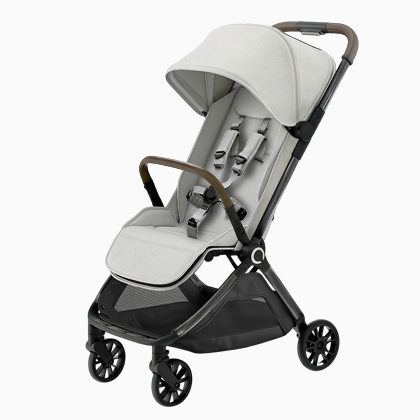
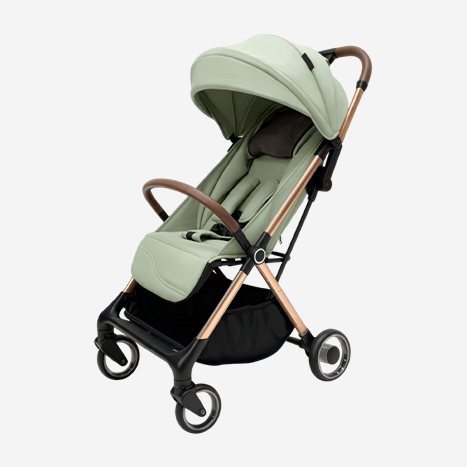
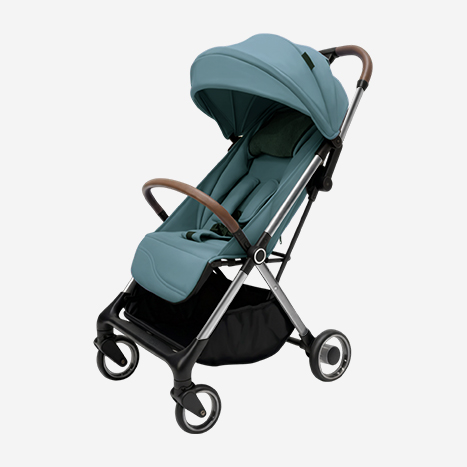
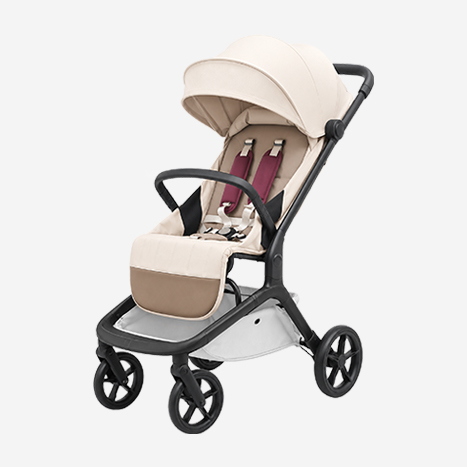
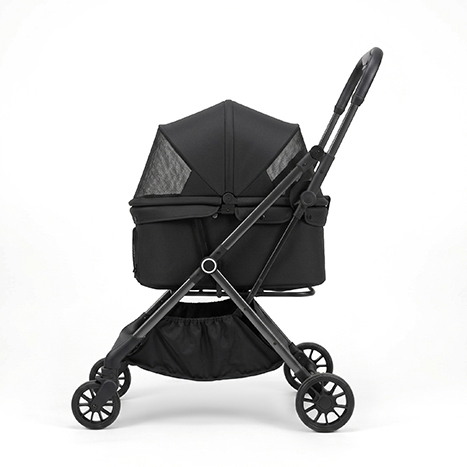
Today, taking the Q6 lightweight baby stroller as an example
The system responds to the six common recall risks in the European and American markets, demonstrating what kind of safety logic a truly designed stroller for the global market should have.
Recall risk one: Failure of locking mechanism → accidental folding or collapse of cart
Nature of Risk
In the United States, the use of the main locking device resulted in the collapse of the vehicle frame due to sudden release caused by vibration, accidental contact, or insufficient strength.
Europe (RAPEX):
It has also been reported multiple times that the trolley accidentally folds under normal use, and the product is deemed to not comply with relevant standards (such as EN1888).
Q6's response
Q6 is equipped with two locking devices. Add an independent second safety lock in addition to the main lock, which needs to be operated separately to release the folded state. Whether in collision testing in the United States or durability testing standards in Europe, even if the main lock is accidentally hit, the second lock can maintain the stability of the frame and prevent “accidental folding”.
Recall risk two: Missing parking device → Failure to equip secondary parking device as required
Nature of Risk
The cart has only one lock when folded, lacking a secondary safety insurance independent of the main lock. Both ASTM F833 in the United States and EN1888 in Europe have clear requirements for this, while RAPEX notifications have repeatedly reported cases of being deemed unqualified due to “insufficient parking devices”.
Q6's response
Q6 is equipped with independent secondary parking equipment in the folded state. When the trolley is folded, the secondary parking device automatically engages to ensure that the trolley will not suddenly pop open due to external force or accidental contact. At the same time, Q6 supports automatic folding and standing, and the entire vehicle remains stable and upright after folding, further avoiding the risk of accidental unfolding — while meeting the dual requirements of European and American standards for “folding stability”.
Recall risk three: Brake system malfunction → Brake cannot be locked or easily loosened
Nature of Risk
The brake structure is fragile, the left and right wheels are not synchronized, or it cannot be reliably locked on a slope. In 2024–2025, RAPEX Europe reported multiple cases of “brake system failure” in pushcarts, determining that the products did not meet the requirements of EN1888 for parking devices.
Q6's response
Q6 adopts a one key dual brake system. A single step can lock both rear wheels simultaneously, with synchronized left and right movements and clear movements. The brake mechanism has undergone dual durability testing of EN1888 and ASTM F833, as well as slope parking testing, to ensure stable locking on various common road surfaces (including slopes), without sliding or loosening.
Recall risk four: Rope/strap too long → risk of necking or entanglement
Nature of Risk
The safety belt adjustment strap and toy hanging rope on the stroller are too long, which may wrap around the neck or limbs of children.
ASTM F833 clause 5.15 has clear limitations on this.
RAPEX in Europe has also reported recalled carts due to the risk of entanglement caused by excessively long ropes.
Q6's response
Q6 strictly designs all components according to European and American standards:
- The length of the seat belt adjustment belt is limited within the safe range, with no excess exposed webbing;
- Excluding movable rope loops that can be pulled and formed;
- All buckles and connection points have passed the winding risk test.
Compliance is not about “roughly meeting”, but about every centimeter of ribbon being able to withstand dual scrutiny from the European and American markets.
Recall risk five: Small parts falling off → suffocation risk
Nature of Risk
Screws, decorative parts, plastic components, etc. fall off during normal use or abuse testing, becoming small parts that can be swallowed by children. In the past two years, there have been recall notices issued in the European and American markets due to the detachment of small parts.
Q6's response
All accessible components of Q6 have passed the small parts test:
- Fixed components such as screws, shaft sleeves, and wheel covers are designed to prevent detachment;
- The decorative parts are integrated with the main body or permanently fixed, without the need for adhesive bonding;
- Each batch of products undergoes abuse testing (drop, torque, tension, etc.) in accordance with EN1888 and ASTM F833 requirements to ensure that no small parts are released.
Recall risk six: Missing labels / instructions → lack of safety warning or assembly instructions
Nature of Risk
The product lacks permanent safety warning labels or the instruction manual lacks critical safety information, resulting in user misuse.
The United States requires compliance with CPSIA tracking labels and warning labels.
The European RAPEX notification also includes products that have been deemed unqualified due to “lack of instructions or warnings”.
Q6's response
Q6 provides a complete three-tier compliance document system:
- Product body: Paste permanent warning labels and tracking labels (in compliance with CPSIA and EU GPSR requirements);
- Instruction manual: Provide clear user manuals in both Chinese and English, including assembly steps, brake operation, folding and unfolding methods, and instructions for adjusting seat belts — expandable to multiple language versions to meet European market requirements;
- Certification documents: CPC certificate (US) and CE (Doc) conformity declaration (EU) can be provided with the goods to prove that the product complies with safety regulations in both places.
Q6: A lightweight trolley that has passed dual certification in Europe and America
| Feature | Q6 Configuration |
| Net weight | 5.3 kg |
| Folding method | Automatic folding and standing |
| Folding safety | Secondary lock device + independent secondary parking equipment |
| Brake system | One key dual brake system |
| American certification | ASTM F833 + CPC certificate |
| European certification | EN1888-2 + CE (Doc) |
| Compliance Response | Addressing Six Major Recall Risks, One by One |
Conclusion: Recall is not a regional issue, but a global safety bottom line
In the past two years, the US CPSC and the EU RAPEX have sent the same message to the industry through dozens of recalls: whether in Boston or Berlin, parents' requirements for baby stroller safety are consistent, and standards are constantly converging.
Q6 does not consider any market standard as the “highest requirement” — on the contrary, we take EN1888-2 and ASTM F833 as design starting points, and respond to regulatory concerns in both Europe and America with one product.
From secondary locking to secondary parking, from one key dual braking to ribbon length control, from anti drop small parts to complete CPC certificate + CE declaration — every design of Q6 is responding to every recall in the European and American markets between 2024 and 2026.
Click here: Contact our sales team
Request CPC certificate, ASTM F833 / EN1888 test report, CE (Doc) document or sample testing for Q6.
Safety is never just a slogan, but a traceable, transatlantic document.